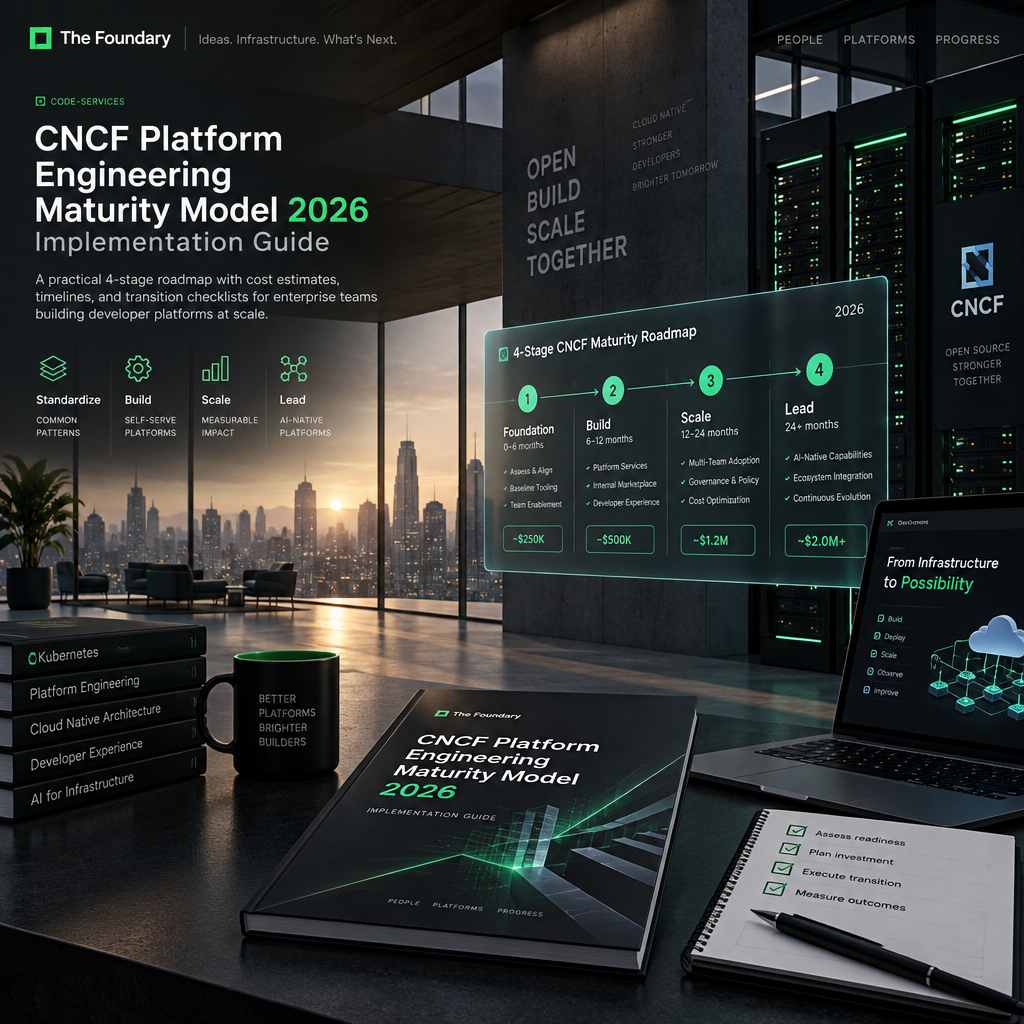
You need a clear path to standardize your developer infrastructure. The cncf platform engineering maturity model offers a verified framework for this journey. It helps you structure your platform from ad hoc tools to optimized systems. Recent updates define specific requirements for AI agents and governance. This document outlines how to adopt these standards effectively in 2026. You will find data on budgets, timelines, and specific technical steps. Our goal is to help you build reliable infrastructure that scales. We recommend reviewing your current state before planning your next phase. The following sections break down each stage of adoption in detail.
The New CNCF IDP Roadmap for 2026
The CNCF officially released updated guidance for platform engineering. This roadmap defines four distinct stages of readiness. You can use these to benchmark your current capabilities. The first stage involves mapping out your key friction points. You must identify the most common workflows for your developers. This analysis helps you prioritize immediate improvements. The second stage introduces standardized self-service capabilities. You aim to reduce manual tasks through automation. The third stage focuses on scaling these solutions across teams. You must ensure your tools remain reliable under load. The final stage optimizes your platform for AI integration. Agents need distinct identities and structured data access. You cannot ignore these requirements if you want future readiness. Many organizations now include these rules in their 2026 plans.
Understanding Platform Engineering Maturity 2026 Stages
We define maturity through four specific levels. The first level is provisional. You might have some tools but no standard processes. The second level is operational. Your team maintains consistent workflows and documentation. The third level is scalable. You support large teams without significant added overhead. The final level is optimizing. Your platform evolves through feedback and data analysis. You measure success through developer satisfaction and delivery metrics. Leading teams often track these figures monthly. You should align your KPIs with these definitions. The Pulumi research group outlined these stages clearly. As of September 2026, these definitions hold industry weight. You can use them to justify budget requests to finance.
Internal Developer Platform Implementation Guide
You need a structured approach to build your IDP. Start by creating a software catalog. This maps every service and dependency in your stack. Next, implement environment management for your developers. You provide safe spaces for testing before production. Deployment management comes next. You automate the release process with GitOps tools. Access controls ensure your developers only see what they need. These capabilities form the core of any successful IDP. You should document each step as you build them. Use open-source tools like Backstage for the UI. This project remains a key incubating initiative within CNCF. It allows you to customize the portal without vendor lock-in. Our team helps clients integrate these components efficiently. Please visit our page for more on engineering foundations.
IDP Rollout Checklist for Enterprises
You should follow a phased approach to rollout. Begin with an assessment of your current workflows. Identify the single most painful path your developers face. Stand up a basic catalog to track your assets. Pave a golden path for that single workflow. Measure adoption and gather feedback from users. Expand your coverage to include high-value services. Embed security and quality checks into your pipelines. Treat your platform as a permanent product investment. Introduce agent-first APIs as you reach higher stages. Ensure your infrastructure is immutable to prevent drift. Use versioned pipelines to maintain audit trails. This checklist helps you avoid skipping critical security steps. Regulated industries often require these controls by policy.
cncf platform engineering maturity model Cost Estimates
Budgeting for a platform initiative requires planning. Median platform budgets currently sit under one million dollars. However, leading organizations often invest five to ten million annually. This covers headcount, third-party components, and security tooling. Custom builds offer control but require high engineering costs. Commercial platforms accelerate setup but add licensing fees. You must consider the total cost of ownership. The ROI comes from avoided engineering hours and debt. Track this through DORA metrics and developer surveys. Payback usually occurs within 12 to 18 months. As of late 2026, these figures remain consistent across enterprises. You should present this data when asking for resources. CFOs appreciate clear links to engineering efficiency.
AI-Agent Interface Requirements in the CNCF Model
Your platform must now support AI agents as tenants. Agents need distinct identities separate from human API keys. They require scoped permissions based on least privilege. You must provide machine-readable state not HTML dashboards. Agents should interact through API abstractions like MCP. This reduces your security blast radius significantly. The CNCF TOC Initiative formalized these evaluation criteria recently. You cannot treat agents as simple scripts or automation. They need structured inputs and verified outputs for compliance. Use signed configurations to validate agent actions. Your platform should enforce these rules automatically. This shift is critical for safe generative AI adoption.
Comparison of Platform Implementation Options
You have several choices when building your IDP. Open source options offer maximum flexibility. Commercial tools provide faster time to market. The table below compares common approaches you might consider.
| Option | Type | Maturity Target | Cost Model |
|---|---|---|---|
| Backstage | Open Source | Stage 1 to 3 | Free |
| Port | Commercial | Stage 2 to 3 | License |
| Pulumi IDP | Commercial | Stage 2 to 3 | Usage |
| Custom | In-house | Stage 0 to 2 | Build Cost |
Compliance and Governance for Developer Platforms
Regulatory requirements shape how you design your platform. Industries like finance require strict audit trails. Immutable nodes help you prevent configuration drift. You must ensure all infrastructure changes are versioned. GitOps tools allow you to sign every config file. Agents that make changes need to be logged clearly. Your system must distinguish between human and machine actions. Bex.co recommends using structured state for these events. This data supports audits and security reviews easily. You should document your compliance controls in your catalog. This helps your security teams verify readiness faster.
Key Figures and Metrics to Track
You need specific data to guide your decisions. Cultural change remains the top barrier for many teams. As of October 2026, 47% of organizations cite this as a primary issue. You must plan workshops to address these gaps. Another critical metric is team adoption rates. The Luca Berton Blog noted 28% of groups now have a dedicated platform team. Leading groups are projected to invest five million or more. This represents a significant shift from the sub-one million range. As of September 2026, median budgets are expected to double. You should use these figures to forecast your own needs. Tracking them helps you justify resource requests to leadership.
Building a Developer Platform Roadmap
Start your journey by defining clear objectives. Map your current workflows to find inefficiencies. You should prioritize paths that deliver the most value. Create a timeline that matches your budget cycles. Ensure your plan includes time for cultural training. Use external benchmarks to set realistic milestones. Our engineering team can help you validate these steps. You can find more details on our services online. Link your roadmap to your business goals directly. This alignment ensures your stakeholders remain supportive throughout.
Conclusion and Next Steps for Your Team
Adopting these standards prepares you for the future. You ensure your infrastructure supports both humans and agents. This approach reduces risk while increasing developer speed. Follow the checklist and budget guidelines outlined here. Your team will build a platform that scales securely. The industry is moving toward these verified practices. You can rely on these figures for planning purposes.
Talk to a Foundry engineer
If you need help implementing these standards please reach out. Talk to The Foundary about your build
Conclusion
Adopting these standards prepares your team for future needs. You ensure your infrastructure supports both humans and agents securely. This approach reduces risk while significantly increasing developer speed. Follow the checklist and budget guidelines outlined here. Your team will build a platform that scales reliably. The industry is moving toward these verified practices. You can rely on these figures for planning purposes.
Frequently Asked Questions!
1. How do I implement MCP/Agent interfaces alongside human portals like Backstage?
You use standard API abstractions for agents and a UI for humans. Backstage supports custom actions which can expose these APIs. Agents need distinct identities separate from human login credentials.
2. What is the exact difference between the Optimizing stage and Scalable stage?
Scalable focuses on managing load and consistency. Optimizing adds AI agent support and continuous feedback loops. You introduce machine tenants and stricter governance at the Optimizing level.
3. How do we handle identity for AI agents not human API keys?
Agents must have distinct identities not shared API keys. You apply scoped permissions using the principle of least privilege. This limits security risks if an agent is compromised.
4. What is the cost of implementing a Stage 3 platform in 2026?
Leading enterprises often invest between five and ten million dollars. This covers headcount and third-party components. Custom builds may cost more in engineering hours than commercial tools.
5. Do I need a commercial portal like Port or is Backstage sufficient for 2026?
Backstage is sufficient for most organizations and remains a CNCF Incubating project. Commercial options may accelerate setup if you lack engineering bandwidth. Your choice depends on your budget and internal resources.
6. How do I handle compliance when agents make infrastructure changes?
Use immutable node infrastructure and signed configurations. Track agent actions through machine-readable state rather than dashboards. Audit logs must distinguish clearly between human and machine actions.
By the Foundry Engineering Team · Updated 2026-10-09