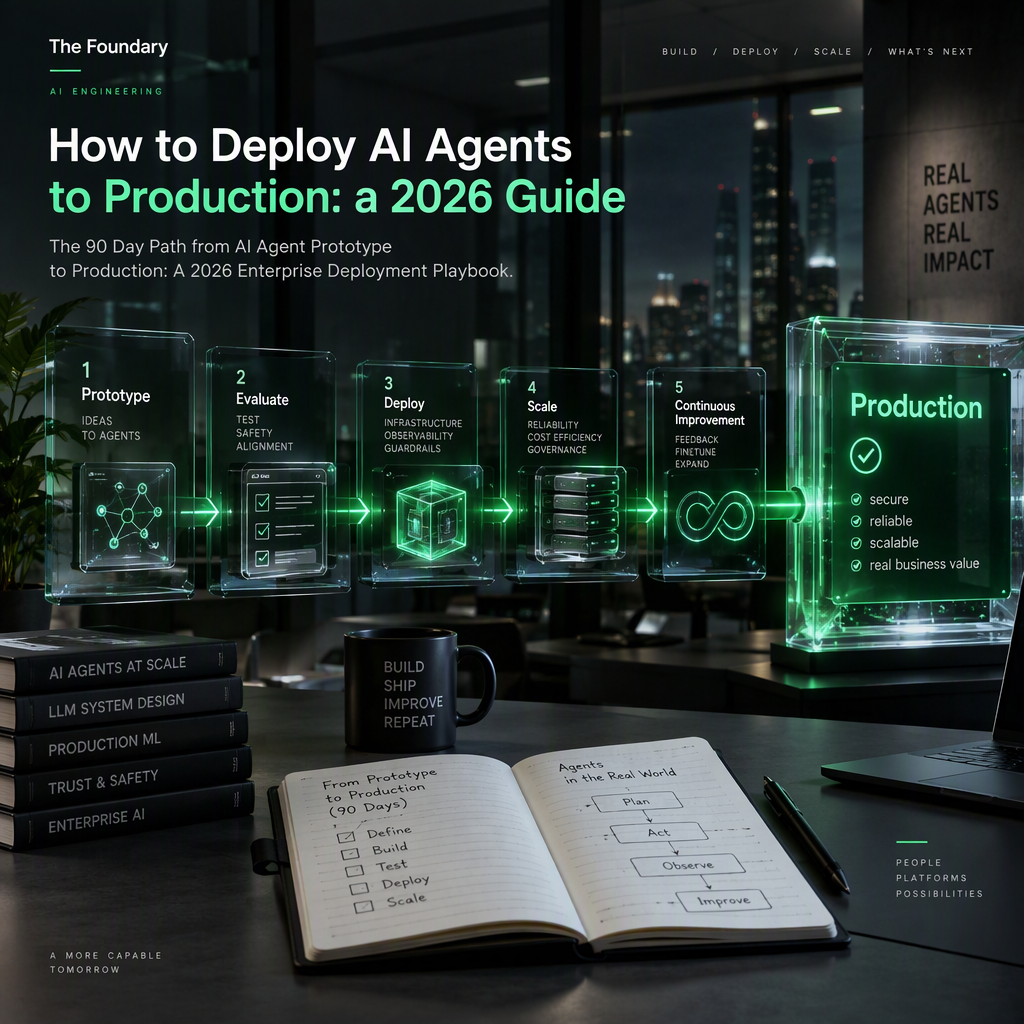
To deploy ai agents to production, you need a clear plan beyond just building a model. Recent data shows 86% to 88% of enterprise pilots never graduate to full scale. Only 11% of organizations have production-ready agentic systems. This guide covers the steps to bridge that gap with measurable gates and controls.
The Production Gap Crisis
Deloitte and Forrester report that roughly 89% of AI agent pilots fail to reach production. Gartner projects over 40% of agentic projects will be canceled by 2027 due to weak governance. You should not let your investment stall at the prototype stage. The cost of scaling is high but failing costs more in wasted resources.
Infrastructure Requirements for AI
Secure runtime environments are vital for safety in enterprise settings. Use container isolation or microVMs to prevent privilege escalation during execution. You need standard API gateways and identity management like OAuth 2.0. Data readiness remains the biggest blocker cited by 52% of organizations. Ensure your data pipelines are clean before you build agent logic.
AI Agent Governance Framework
Only 21% of firms have a mature governance model for autonomous agents. You must define human-in-the-loop escalation paths early in development cycles. Immutable audit trails for prompts and outputs are mandatory for regulated sectors. Align with GDPR and EU AI Act requirements for compliance readiness. For details on engineering standards, see The Foundary, Engineering Digital Foundations.
Platform Comparison
Selecting the right tool depends on your existing stack and compliance needs. Below is a summary of options and their strengths.
| Platform | Deployment Model | Primary Strength | Typical Pricing Model | Best Fit |
|---|---|---|---|---|
| Microsoft Copilot Studio | Cloud (Microsoft 365) | Deep integration with Power Platform and Azure AD | Copilot Credits (~$200/mo for 25k messages) | Microsoft-centric enterprises |
| Salesforce Agentforce | Cloud (Salesforce) | Einstein Trust Layer and CRM-native workflows | ~$2 per conversation or Flex Credits | Salesforce customers |
| AWS Bedrock AgentCore | Cloud (AWS) | Runtime observability and VPC-native security | Usage-based token pricing | AWS-native regulated enterprises |
| Rasa | Self-hosted / Private Cloud | LLM-agnostic and full ownership | Enterprise tier (custom) | Regulated industries requiring air-gap |
| LangGraph / CrewAI | Self-hosted / Cloud | Open-source flexibility and stateful multi-agent | Free OSS (plus hosting costs) | Engineering-led teams |
Your 90 Day Deployment Roadmap
Follow this phased approach to move from concept to scale. Use this timeline to organize your engineering teams.
- Phase 1: Discovery & Strategy (Weeks 1 to 4). Select high-value use case and define success metrics. Investment $50K, $150K.
- Phase 2: Infrastructure Hardening (Weeks 5 to 8). Implement SSO and RBAC; deploy sandboxing for agent execution.
- Phase 3: Build & Validation (Weeks 9 to 12). Construct minimum viable agent; implement automated evaluation harness.
- Phase 4: Controlled Production Launch (Weeks 13 to 16). Roll out to 10 to 15% of target traffic; monitor latency.
- Phase 5: Scale & Optimization (Months 5 to 12). Expand to full scope; implement continuous evaluation.
Budget and ROI Projections
Implementation ranges from $50,000 to $100,000 for basic setups. Advanced platforms require $250,000 to $500,000. Enterprise ecosystems start above $500,000. The median payback period for agent deployments is 6.7 months. You should track cost-per-task to manage token limits. Token and compute costs spike without limits in the wild.
Security and Compliance Controls
Immutable audit trails covering prompts, tool calls, and outputs are mandatory for regulated industries. You must implement automated evaluations running on every prompt change to avoid rollbacks. Agents without automated evals had a 47% rollback rate versus 9% for agents with full coverage. Refer to The Foundary for architecture guidance.
Scaling Strategies
Most enterprises start with service agents before expanding to complex workflows. Only 38% of production agents have automated evaluations running on every prompt change. You should avoid shadow AI by enforcing formal agentic AI strategies. Ensure your team has at least one person with LLM integration experience.
Talk to a counsellor
Start your transformation today by scheduling a review with our engineering team. We can help you define the right metrics and security controls for your AI initiative.
Conclusion
Deploying AI agents requires discipline in governance and infrastructure. Follow the 90-day roadmap to avoid common traps. Measure ROI early to justify the investment and align with compliance goals.
Frequently Asked Questions!
1. How do we prevent shadow AI agents from being deployed without governance?
You must enforce formal agentic AI strategies and restrict access to approved platforms. Track all agent usage through centralized identity and API gateways.
2. What is the minimum viable evaluation harness for production agents?
It should test prompts and outputs against a baseline set of safety and performance benchmarks. Aim for coverage on at least 10% of traffic to detect regressions.
3. How do we handle data residency requirements when using public LLM APIs?
Choose platforms that offer regional data residency and encryption at rest. Ensure your contracts comply with GDPR and other local data laws.
4. At what autonomy tier should we require human-in-the-loop approval?
Require approval for agents performing financial transactions or accessing sensitive user data. This mitigates risk while allowing lower-risk tasks to run autonomously.
5. How much should we budget for ongoing model fine-tuning and RAG re-indexing?
Budget roughly 20% of your initial build costs for annual maintenance. This covers compute, data engineering, and compliance re-validation needs.
6. What are the specific controls for preventing prompt injection attacks?
Use sandboxing to isolate agent execution and validate all tool inputs and outputs. Implement rate limits and anomaly detection on user prompts to block malicious inputs.