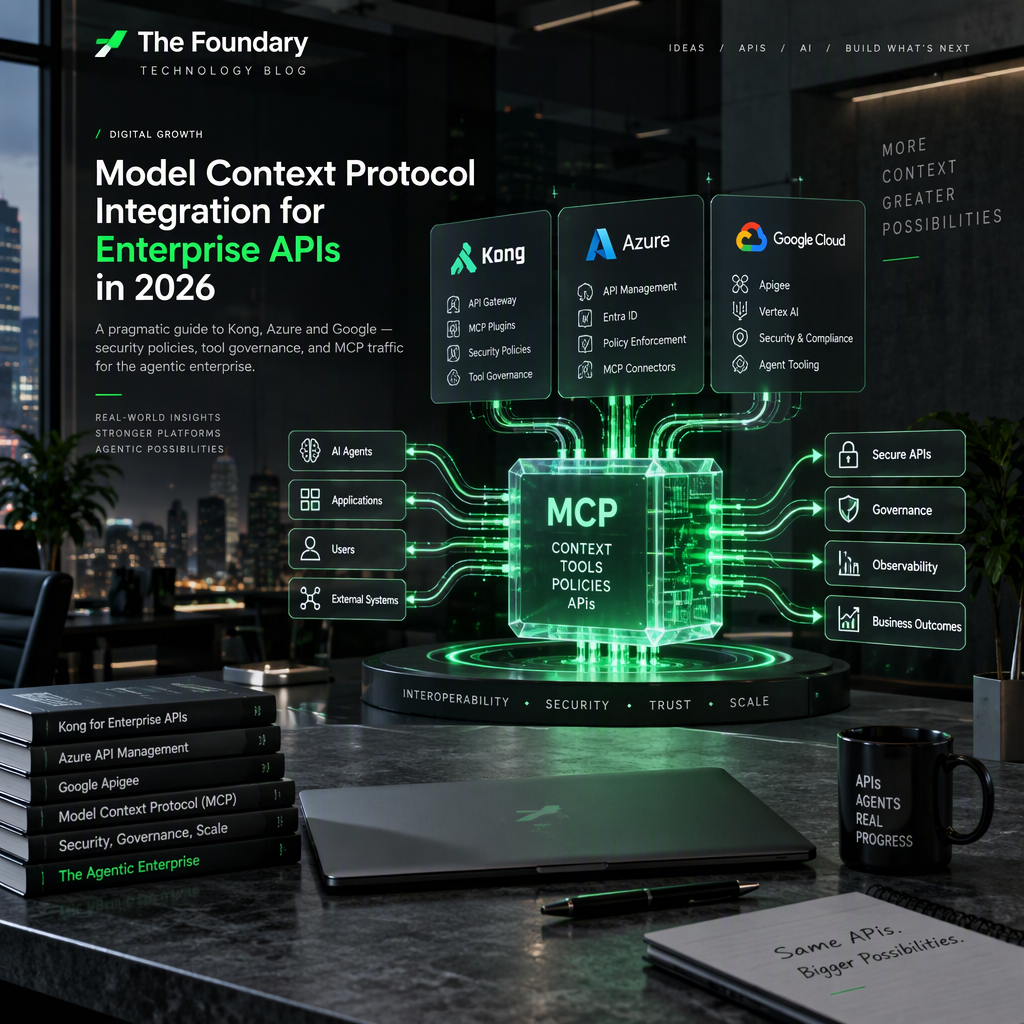
Model context protocol integration transforms how enterprises expose APIs to AI agents. This shift became mainstream in September 2026 when major cloud providers updated their gateways. You no longer need custom servers to connect tools to agents. The latest updates from Google, Kong, and Azure simplify this path. These changes reduce engineering overhead while maintaining strict security controls. You can now use existing OpenAPI specs directly. This approach aligns with modern cloud api strategy 2026 needs.
Why Model Context Protocol Integration Matters
Building custom Model Context Protocol servers used to require significant development effort. Teams had to manage connections and authentication manually. Now gateways handle the heavy lifting for you. This allows your platform engineering teams to focus on business logic. The stateless nature of the protocol improves scalability. It removes session dependencies that complicate scaling.
September 2026 Updates
Google Cloud launched Public Preview for MCP server support on September 24, 2026. This update lets you annotate existing APIs using OpenAPI 3.x. Kong released AI Gateway 2.2 on September 30, 2026. It adds tool governance and identity policies for better control. Azure expanded API Management to support server versioning. These features enable safe lifecycle management for tools.
Security Requirements
Authentication is critical for inbound MCP traffic. Gateways require configured strategies like JWT or OAuth 2.1. You must protect the tool discovery endpoint against unauthorized enumeration. API keys are also an option for internal systems. Ensuring proper access control prevents misuse of tools. This protects your backend data from exposure.
Vendor Comparison
| Platform | Server Mode | Tool Limit | Session Handling |
|---|---|---|---|
| Google Cloud | Annotation-based | 1,000 tools | Stateless |
| Kong | Conversion-Listener | Not published | Redis or Client-side |
| Azure | REST-as-MCP | Not published | Stateless |
This table highlights key differences in capabilities. Google imposes a hard limit on tools per instance. Kong offers flexible session handling options. Azure focuses on versioning and observability. You should choose based on your specific needs.
Implementation Steps
- Identify a REST API managed within your gateway.
- Add MCP-specific annotations to your OpenAPI spec.
- Configure security policies for the discovery endpoint.
- Deploy the updated API specification to the gateway.
- Register the MCP server in your enterprise catalog.
- Test the connection using an MCP client like Cursor.
Follow these steps to ensure a smooth rollout. Testing is essential to verify tool execution. Use tools like Cursor or Claude Desktop for validation.
Cost and ROI
Using API Gateway features avoids maintaining separate MCP server infrastructure. This saves on containers and compute costs. Google charges standard API Gateway request fees. Azure costs include instance fees and usage for endpoints. Kong requires an Enterprise tier license for AI features. Centralized observability for AI traffic is a major ROI driver. It reduces engineering time spent on custom integrations.
Technical Constraints
You must document existing APIs with OpenAPI 3.0 or 3.1. The protocol version is 2026-07-28. This specification introduced a stateless core without persistent sessions. Backend services must support HTTP(S) transport for standard tool calls. WebSocket is supported by Kong and Azure for specific use cases. Ensure your team has skills in gateway policy configuration.
Observability and Governance
Kong AI Gateway allows you to store MCP session state in Redis. You can also encrypt session data client-side for security. Azure API Management supports versioning to expose multiple versions side-by-side. Google Cloud aggregates tool listings across all approved API products. These features help you manage tool lifecycles effectively. You can track latency and failure rates for each tool.
Tool Governance Policies
Identity policies are essential for controlling agent access. Kong includes identity policies in version 2.2. You can restrict access based on user roles or scopes. Azure supports OAuth 2.1 for access control. Google uses JWT or API keys for inbound traffic. Defining these policies prevents unauthorized tool access. Always audit who accesses your tool endpoints.
Scalability Considerations
Google limits instances to 1,000 tools per gateway. This might affect large enterprises with extensive APIs. You may need multiple instances if you exceed this. Azure and Kong do not publish specific tool limits yet. Plan your architecture to handle future growth. Distribute workloads across regions if needed.
Future Proofing Your Cloud API Strategy
Your cloud api strategy 2026 should prioritize flexibility. Use vendors that support standard OpenAPI annotations. This ensures you can switch providers if needed. Keep monitoring the Model Context Protocol specification for changes. Stay updated on new capabilities like workspace support. Read the latest documentation at Model Context Protocol.
Internal Resources
Explore our work on digital growth at The Foundary. We help institutions scale platforms using these technologies. Our team has deep experience with API architecture and AI. You can also review our Terms of Use before engaging. For data protection details, see our Privacy Policy.
Talk to a Foundry engineer
Ready to modernize your API platform with AI agent connectivity? Talk to The Foundary about digital growth
Conclusion
Model context protocol integration is now feasible without custom server code. Vendors released significant updates in late 2026 to support this. Security and observability remain top priorities for enterprises. Choose a gateway that fits your existing infrastructure needs.
Frequently Asked Questions!
1. What is the maximum number of tools I can expose via Google Cloud API Gateway?
Google Cloud API Gateway imposes a limit of 1,000 tools per gateway instance. This limit was specified in the September 2026 release notes.
2. How do I secure the tool discovery endpoint against unauthorized enumeration?
You must protect the tool discovery endpoint using JWT, API keys, or OAuth 2.1. Ensure inbound policies require authentication for the tools/list endpoint.
3. Can I expose nested JSON objects or complex schemas as tool parameters?
Support for deeply nested object schemas varies by vendor. Public specifications lack specific details on rendering limits. Contact vendor support for exact schema constraints.
4. What happens if my backend API schema changes?
You typically need to update your OpenAPI annotations and redeploy the gateway. Azure supports versioning to manage these changes side-by-side.
5. Is MCP traffic encrypted between the gateway and the backend?
Backend services must support HTTP(S) transport. Ensure you configure TLS for backend connections to maintain encryption.
6. How does versioning work for MCP servers in Azure API Management?
Azure API Management supports server versioning to expose multiple versions side-by-side. This enables safe lifecycle management for your tools.
By the Foundry Engineering Team · Updated 2026-10-01