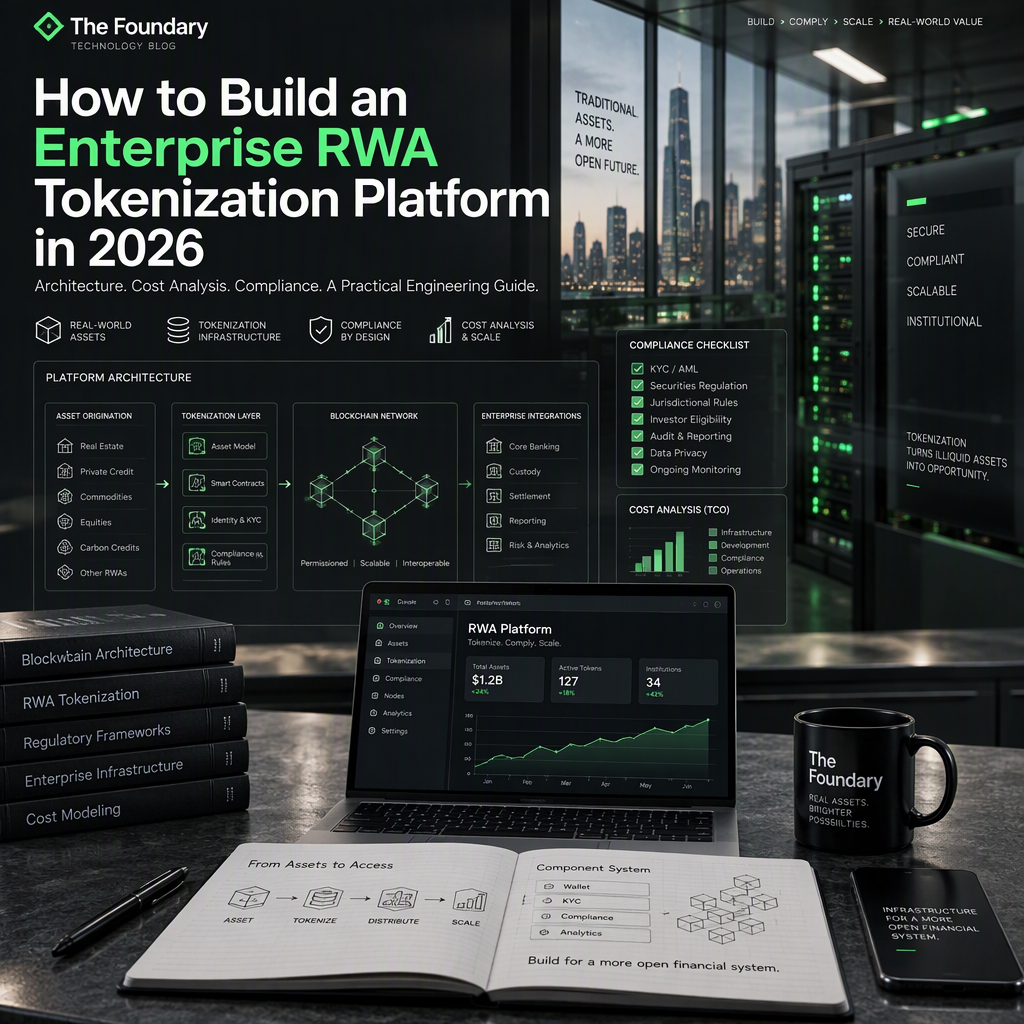
The rise of an enterprise rwa tokenization platform marks a shift in financial infrastructure following recent regulatory updates. DTCC and the CFTC signaled clear pathways for digitizing assets in late September 2026. You need to understand how to engineer systems that meet these new standards without compromising on security or speed.
Regulatory Signals in September 2026
Recent announcements have clarified the path for institutions. The DTCC will launch its Tokenization Service in October 2026 covering $114 trillion in assets. This move follows guidance from the CFTC released on September 24, 2026. Their update confirms that blockchain can satisfy recordkeeping requirements under existing regulations. These changes reduce uncertainty for teams building production systems.
Designing Your Technical Architecture
You must select a blockchain and token standard that aligns with your compliance needs. ERC-3643 is recommended for security tokens requiring identity verification. This standard includes components like the Identity Registry and Compliance Module. You can explore foundational engineering concepts on the The Foundary site. Ensure your stack supports oracle feeds for net asset value data.
Understanding ERC-3643 Compliance
The ERC-3643 standard typically takes 8-14 weeks to deploy from specification to mainnet. It consists of four core smart contract components. These include the Token Contract and Claim Issuers. Detailed guides explain how to implement these contracts safely. Using this standard helps enforce transfer restrictions automatically.
Cost Analysis and Budget Planning
Budgeting for infrastructure requires accounting for legal and technical expenses. Legal structuring via an SPV can cost between $100,000 and $300,000. Smart contract audits range from $50,000 to $200,000. Custody integration adds another $50,000 to $200,000. These figures help you plan your initial capital requirements.
Build Versus Buy Decisions
Deciding to build or buy depends on your asset diversity. Custom development costs start at $500,000 and take 12 to 24 months. White-label platforms cost between $100,000 and $500,000. Infrastructure tokens cost between $50,000 and $200,000. Choose the model that fits your timeline and budget constraints.
Implementation Roadmap
Follow these steps to launch your system efficiently.
- Select jurisdiction and SPV structure in Phase 1.
- Design token contracts with identity registry in Phase 2.
- Develop smart contracts including compliance modules in Phase 3.
- Integrate KYC providers and configure rules in Phase 4.
- Conduct security audits and testnet flow in Phase 5.
- Deploy to production and begin onboarding in Phase 6.
Platform Comparison Overview
| Platform | Best For | Compliance Architecture | Primary Chains |
|---|---|---|---|
| Securitize | US-registered funds | Transfer agent + broker-dealer | Ethereum, Polygon |
| Tokeny | Compliance infrastructure | ERC-3643 identity/compliance | EVM |
| Ondo Finance | Tokenized Treasuries | SEC-registered advisor | Ethereum, Solana |
Risk Management Strategies
You should establish clear controls for custody and secondary trading. Use HSM or MPC key management for secure private key storage. Secondary trading must be restricted to whitelisted investors. Monitor network upgrades to maintain contract compatibility. Always keep off-chain identity storage separate from on-chain attestations.
Future Market Outlook
Institutions expect widespread adoption by 2030. McKinsey projects a tokenized market cap of $2-4 trillion. Standard Chartered forecasts $30 trillion by 2034. Current on-chain RWA holdings stand at $37.89 billion. These numbers indicate strong demand for compliant infrastructure.
Conclusion of Technical Requirements
Building a secure system requires careful planning and adherence to standards. Focus on legal structuring and smart contract security. Regular audits and updates will keep your platform compliant. The right architecture supports long-term growth and trust.
Common Technical Questions
Does ERC-3643 require off-chain identity storage? Yes, it relies on attestations rather than storing data directly on-chain. How do you handle NAV feeds? Use decentralized oracle networks with circuit breakers. What about secondary trading? Transfers are limited to whitelisted wallets by default.
Talk to a counsellor
Contact The Foundary to discuss your blockchain platform needs. Our team can help you design and scale compliant solutions. Start a conversation about your specific project requirements today.
Conclusion
Building a secure system requires careful planning and adherence to standards. Focus on legal structuring and smart contract security. Regular audits and updates will keep your platform compliant. The right architecture supports long-term growth and trust. Stay informed on regulatory changes to maintain operational resilience.
Frequently Asked Questions!
1. Does ERC-3643 require off-chain identity storage?
Yes, it relies on attestations rather than storing data directly on-chain. This approach protects sensitive personal information while maintaining compliance.
2. How do you handle NAV feeds?
Use decentralized oracle networks with circuit breakers. These ensure data accuracy and prevent manipulation during market volatility.
3. What about secondary trading?
Transfers are limited to whitelisted wallets by default. This restriction maintains regulatory compliance for security tokens.
4. What are the primary legal costs?
Legal structuring via an SPV typically costs between $100,000 and $300,000. This is often the largest line item in your budget.
5. How long does ERC-3643 take to deploy?
Deployment typically takes 8-14 weeks from specification to mainnet. This timeline includes security audits and testing.
6. What is the total market cap projection?
McKinsey projects $2-4 trillion by 2030. Standard Chartered forecasts $30 trillion by 2034.