Blog

  • AI Native SaaS Pricing Architecture Guide for 2026

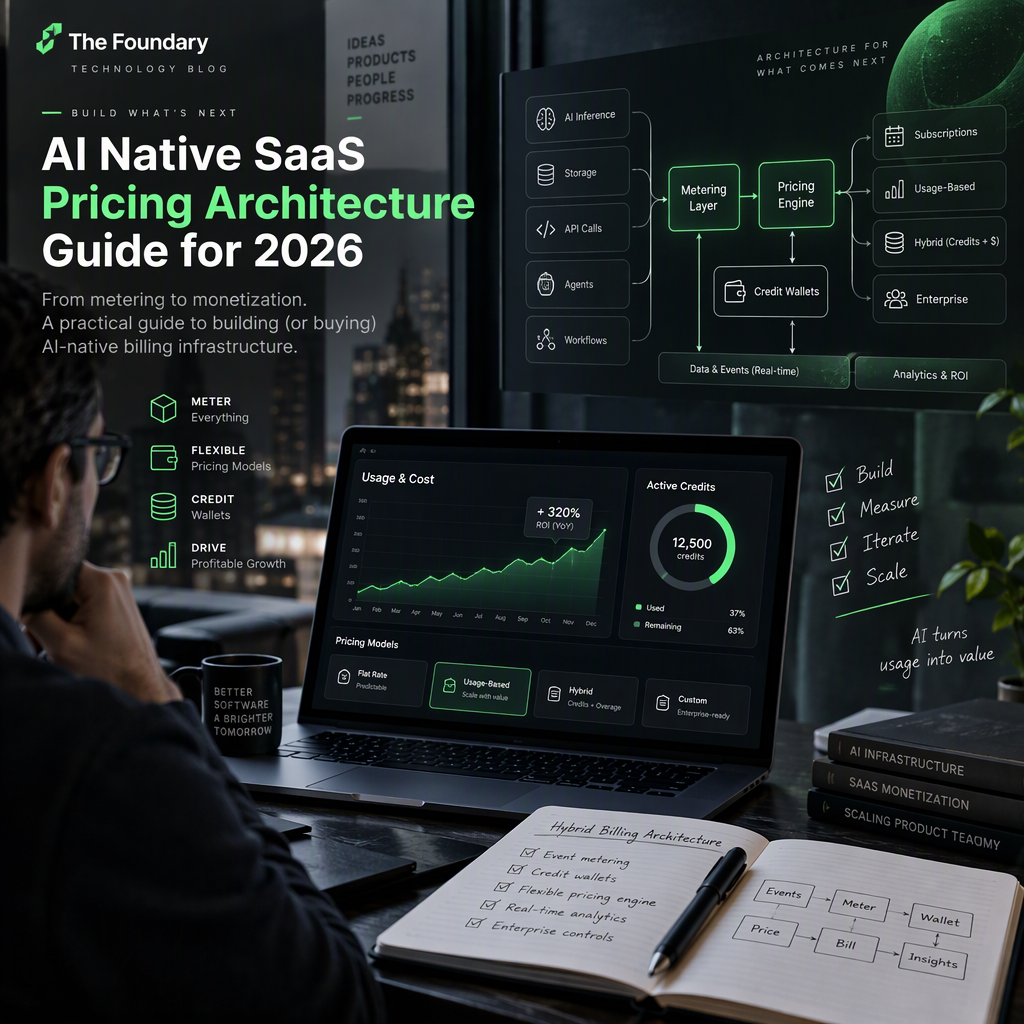
    AI Native SaaS Pricing Architecture Guide for 2026

    When planning your next platform iteration, ai native saas pricing becomes the core challenge for CTOs. Recent moves by Salesforce and Microsoft have shifted industry standards toward hybrid models in mid 2026. You must design systems that balance subscription stability with usage variability to meet customer expectations effectively.

    The Shift to Hybrid Models

    The industry is moving away from pure per-seat pricing toward flexible structures. Salesforce introduced Pay-per-resolution pricing at $2 per resolved conversation for its Help Agent SKU in July 2026. This change represents an outcome-based billing alternative to the original $2 per conversation model. Microsoft Copilot Cowork launched to general availability on June 16, 2026. They transitioned from free Frontier preview to usage-based billing through Copilot Credits at $0.01 per credit.

    This marked Microsoft’s shift from flat licensing to metered enterprise AI operations. You can see this in 46% of SaaS companies now use hybrid pricing. This includes base subscription plus usage or outcome components. Pure per-seat pricing has declined to 8% of the market. As a result, you need infrastructure that supports multiple billing types simultaneously.

    Understanding ai native saas pricing Structures

    Choosing the right metric is critical for adoption and revenue stability. You must select billable metrics like tokens, actions, conversations, or outcomes based on value correlation. Salesforce Agentforce offers three pricing models for different needs. They provide $2 per conversation for customer-facing agents and Flex Credits at $500 per 100,000 credits. They also offer $2 per resolved conversation for Help Agent. Maxio launched native credit Wallets in September 2026 to replace spreadsheets for prepaid credit and token tracking in SaaS and AI monetization.

    Microsoft Copilot Cowork requires a Microsoft 365 Copilot license at $30 per user per month. They bill task execution separately through Copilot Credits at $0.01 per credit on pay-as-you-go pricing. Intercom’s Fin AI agent charges approximately $0.99 per resolved conversation. This demonstrates outcome-based pricing in customer support effectively. Usage-based pricing adoption reached 38% of SaaS companies in 2026. This is up from 27% in 2023.

    Credit Wallet Design Patterns

    Credit wallets allow you to prepay for usage while retaining flexibility. Maxio launched native credit Wallets in September 2026 to replace spreadsheets for prepaid credit and token tracking in SaaS and AI monetization. You should implement event ingestion pipelines to capture every usage action with customer ID and timestamp. Configure credit wallets with rules for rollover, expiry, and priority across multiple wallets. This ensures customers do not lose value unexpectedly when plans change.

    You can also set up hybrid pricing combining base subscription with usage or outcome components. This approach gives clients the budget control of a subscription with the scalability of usage billing. It reduces friction during procurement while accommodating variable AI workloads. You must ensure your billing system supports complex rules like priority across different credit pools.

    Metering Infrastructure Requirements

    Building custom credit infrastructure requires 4 to 8 weeks engineering time for real-time metering alone. Many companies find that buying existing tools is faster for deployment. Usage-based billing platforms like Solvimon, Maxio, or Chargebee are required for hybrid pricing models with real-time metering. Stripe acquired Metronome for approximately $1 billion in January 2026. This was to provide enterprise-grade usage metering for high-volume AI companies like OpenAI and Anthropic.

    Enterprise AI adoption requires spending limit configurations in admin centers. This prevents cost overruns from metered billing. Salesforce Agentforce deployments require a Service Cloud license underneath. Real costs range $150,000 to $600,000 in Year 1 for mid-market companies due to mandatory Data Cloud requirements. You need a platform that handles high volumes without latency during billing cycles.

    Platform Pricing Model Key Metric Entry Cost Best For
    Salesforce Agentforce Hybrid Per conversation, Flex Credits, Per resolution $2/conversation Enterprise CRM + AI agents
    Microsoft Copilot Cowork Hybrid + Usage Copilot Credits $30/user seat + $0.01/credit Microsoft 365 enterprises
    Intercom Fin Outcome-based Per resolved conversation ~$0.99/resolution Customer support teams
    Solvimon (Billing Platform) Flexible Multi-dimensional metering Free up to $3M billed AI-native companies
    Chargebee Hybrid Per seat + usage overages From $599/month Mid-market SaaS
    Stripe Billing (Metronome) Usage-based Token/API usage Custom pricing Enterprise on Stripe

    Step by Step Process

    You can follow a structured path to implement these changes safely. Start by selecting the billable metric that correlates most closely with customer value. Choose a billing platform that offers real-time metering and credit wallet primitives. Implement event ingestion pipelines to capture every usage action with customer ID and timestamp.

    1. Select billable metric based on value correlation
    2. Choose billing platform with real-time metering and credit wallet primitives
    3. Implement event ingestion pipeline to capture every usage action with customer ID and timestamp
    4. Configure credit wallets with rules for rollover, expiry, and priority across multiple wallets
    5. Set up hybrid pricing combining base subscription with usage or outcome components
    6. Implement spending controls, caps, and alerts in admin center for cost governance
    7. Establish financial reconciliation to track cost-to-revenue per customer

    These steps ensure your infrastructure scales as your AI features expand. You must establish financial reconciliation to track cost-to-revenue per customer. This data helps you refine pricing over time.

    Cost Analysis and ROI

    Evaluating the cost of building versus buying is essential for budget planning. Chargebee platform starts at $599/month for usage-based billing with credit support. Stripe Billing charges 0.7% of billing volume plus processing fees totaling approximately 1.5% total. Metronome acquisition pricing is custom for enterprise at Stripe scale. Building custom credit infrastructure requires 4 to 8 weeks engineering time for real-time metering alone.

    Salesforce Agentforce deployments require a Service Cloud license underneath. Real costs range $150,000 to $600,000 in Year 1 for mid-market companies. This is due to mandatory Data Cloud requirements for full functionality. You should factor these hidden costs into your total cost of ownership. Use The Foundary, Engineering Digital Foundations to explore how to build these systems.

    Managing Customer Expectations

    Transparent communication prevents bill shock during rollout. Use clear documentation that explains how meters work and how limits apply. Microsoft Copilot Cowork billing began July 1, 2026 for existing Frontier preview customers after a grace period. New GA tenants began billing June 16, 2026. Customers had time to adjust before costs appeared.

    Provide admin centers with spending limit configurations to prevent overruns. This empowers teams to manage their own usage budgets. Ensure your interface shows remaining credits or balances in real time. This reduces support tickets and increases trust in the billing system. Always align billing visibility with customer success goals.

    Future Proofing Your Architecture

    Prepare for regulatory changes as AI usage becomes more scrutinized. You may soon face specific compliance requirements for AI usage metering in regulated industries. Build flexible schemas that allow you to add new metrics without major refactoring. This prepares you for potential standardization in the industry.

    You can reference Terms of Use to understand how data handling aligns with billing records. As AI capabilities evolve, so will what customers consider valuable. Keep your infrastructure adaptable to accommodate these shifts without downtime. Continuous monitoring of billing efficiency will keep your margins healthy.

    As AI capabilities evolve, so will what customers consider valuable. Keep your infrastructure adaptable to accommodate these shifts without downtime. Continuous monitoring of billing efficiency will keep your margins healthy. You will need to update your pricing engine regularly to reflect new feature launches.

    Talk to a Foundry engineer

    Ready to redesign your billing infrastructure for the next generation of AI features? Talk to The Foundary about your product

    Conclusion

    Building a scalable pricing architecture for AI features requires careful planning around metering and credit management. Hybrid models offer the best balance for most B2B platforms in 2026. Start with clear metrics and reliable infrastructure to avoid future rework.

    Frequently Asked Questions!

    1. How do I decide between per-conversation, per-action, or outcome-based pricing for my AI product?

    You must select billable metrics based on value correlation. If your AI resolves issues, outcome-based pricing works well. If it performs distinct tasks, use per-action billing.

    2. What are the technical requirements for real-time credit wallet implementations at scale?

    You need event ingestion pipelines to capture every action with timestamps. Configure rules for rollover and expiry. Use platforms with native credit wallet primitives.

    3. How can I prevent bill shock for customers when usage-based AI billing is unpredictable?

    Provide spending limit configurations in admin centers. Ensure your interface shows remaining credits or balances in real time. Alert customers before limits are reached.

    4. What financial reporting challenges arise when mixing subscription and usage revenue?

    You must establish financial reconciliation to track cost-to-revenue per customer. This requires detailed data linking usage events to billing invoices accurately.

    5. How do I migrate from per-seat pricing to hybrid models without losing existing customers?

    Implement hybrid pricing combining base subscription with usage components. Ensure clear documentation explaining how meters work and how limits apply for transparency.

    6. What credit wallet design patterns work best for multi-team organizations with shared pools?

    Configure credit wallets with rules for rollover, expiry, and priority across multiple wallets. This ensures teams do not lose value unexpectedly when plans change.

    By the Foundry Engineering Team · Updated 2026-10-03

     

  • Implement Enterprise Blockchain Privacy Implementation Strategy

    Implement Enterprise Blockchain Privacy Implementation Strategy

    Your journey begins with enterprise blockchain privacy implementation to secure sensitive data. The EY Blockchain Privacy Sandbox launched in March 2026 enables developers to experiment with privacy-preserving smart contracts. This new tooling changes how you design secure systems. We explore the full lifecycle of integration. The goal is compliance without performance loss.

    Understanding Enterprise Blockchain Privacy Implementation

    You need to understand what privacy means in a distributed ledger. Standard blockchains are transparent by default. This transparency can violate regulatory requirements. Enterprise blockchain privacy implementation solves this by hiding transaction data. You must use cryptographic methods to achieve this. Zero knowledge proofs allow you to prove validity without revealing inputs. This approach keeps your network secure and compliant. It works well for regulated industries like finance.

    How to Implement Zero Knowledge Proofs in Enterprise Blockchain

    The process requires careful architectural planning. You must select the right zk snark variant for your use case. Circuit design is the first step. You translate your business logic into mathematical constraints. This design is complex and error-prone. You should start with small proof sets. Test them extensively before scaling. The complexity grows with logic depth. Keep your circuits shallow for speed. Use a trusted setup if your chain allows. This step ensures security of your proofs.

    Zk Snarks vs Legacy Encryption Cost Comparison

    Comparing costs is essential for budgeting. Legacy encryption is cheaper for simple data. ZK proofs are cheaper for verification. Table 1 shows the key differences.

    Feature Zk Snarks Legacy Encryption
    Setup Cost High Low
    Transaction Cost Variable High
    Verification Speed Fast Moderate
    Privacy Level High Medium

    You should consider the operational load. ZK proofs save bandwidth on verification. Legacy methods cost more to store data. As of March 2026, EY benchmarks show a 20 percent bandwidth savings for large deployments. This metric matters for high volume networks. You must measure your own traffic to confirm.

    Enterprise Blockchain Privacy Implementation Timeline

    You need a realistic schedule for rollout. We propose a 90-day timeline. This plan covers design, build, and test phases. You will face delays if not careful. The timeline helps you manage risk.

    1. Days 1 to 15: Define use cases and privacy constraints.
    2. Days 16 to 45: Design zk circuits and build proof generators.
    3. Days 46 to 60: Integrate with your blockchain client.
    4. Days 61 to 75: Run audit and stress tests.
    5. Days 76 to 90: Deploy to mainnet and monitor.

    This schedule is tight for complex systems. You can extend it by 30 days if needed. Always allocate buffer for code review. Testing often reveals new edge cases. You must verify your circuits on testnet. Use the EY Blockchain Privacy Sandbox for early experiments.

    Zk Proof Audit Checklist 2026

    Audits are mandatory before deployment. The stakes are high in production. The 2026 checklist covers new vectors. You must verify every circuit constraint. Do not skip the setup phase. A compromised setup ruins the system. Check that your circuit matches your spec. Validate the proof generator outputs. Review the circuit for hidden leaks. Verify the prover and verifier code. Run the tests on multiple machines. Keep a log of every finding. This checklist protects your reputation.

    Zero Knowledge Rollups Enterprise

    Rollups scale transactions efficiently. They bundle proofs into a single output. This reduces fees significantly. Enterprise rollups are gaining traction. You can build custom chains for specific apps. They share security with the main chain. This reduces your attack surface. You gain speed by batching requests. Use rollups when volume is high. They fit well with privacy proofs. This combination is powerful for scaling.

    Hyperledger Fabric ZK Integration Guide

    Hyperledger Fabric is a common choice. You can add ZK to your chain. The integration requires smart contract changes. You write chaincode to accept proofs. This logic checks validity without data. You need a trusted setup service. This service can run on a private node. Verify all chaincode on a testnet first. This approach aligns with permissioned networks. Consult the official Ethereum Foundation docs for standards on ZK standards. You should review Privacy Policy regarding data handling rules in your org.

    Building Secure Private Networks

    Security must be your primary goal. You protect data through cryptography. Do not rely on obscurity. Assume attackers know your setup. Prove security mathematically. Use standard libraries for crypto. Do not write custom math. Custom math has bugs. Use verified libraries like Circom. Update your dependencies often. This keeps you safe against known flaws.

    Managing Compliance and Regulation

    You must meet legal standards. GDPR and CCPA affect your data. ZK proofs help satisfy these laws. They hide personal data. You can prove identity without revealing it. This helps with KYC and AML. Document your privacy features. Regulators will ask for proof. Keep your audit trails intact. Show that you follow the checklist. This proves your intent and control.

    Measuring Success

    Track performance and security. Measure proof generation times. Track verification times on clients. Monitor bandwidth usage. Watch for any privacy leaks. Use tools to trace your logs. Ensure no data leaves the circuit. Run penetration tests. Hire external auditors. This step validates your work. Success means zero breaches. It also means user trust. You build trust through transparency of your methods.

    Future Considerations for 2027

    Technology evolves fast. ZK research is growing. New compilers may emerge. Stay updated on the field. Follow academic papers and blogs. Join developer communities. The next versions may be faster. Plan for upgrades. Build modular circuits. This helps you adapt quickly. The industry is changing. You must adapt or fall behind. Use the The Foundary, Engineering Digital Foundations to explore more about your infrastructure needs.

    Talk to a Foundry engineer

    If you are planning a private ledger project, reach out to our team. Talk to The Foundary about blockchain

    Conclusion

    Enterprise blockchain privacy implementation is complex but feasible. The EY Sandbox tools help streamline development. Use the timeline to manage your rollout. Follow the checklist for security. Measure your success carefully. You build trust by proving security without leaking data. This path leads to compliant and scalable systems. Your architecture should prioritize privacy from the start. The costs and benefits are clear.

    Frequently Asked Questions!

    1. What is the main benefit of zero knowledge proofs?

    They allow verification of data without revealing the underlying information. This helps keep transactions private.

    2. How much does ZK proof setup cost?

    Setup costs vary by circuit complexity. It is high for large systems but is a one-time expense.

    3. Can ZK work with Hyperledger Fabric?

    Yes. You add chaincode to accept proofs. It integrates well with permissioned networks.

    4. What are the risks of ZK implementation?

    Setup compromise and circuit bugs are the main risks. Audits reduce these risks significantly.

    5. How do I choose a ZK prover?

    Pick one with low memory usage and speed. Use benchmarks from the EY Sandbox to decide.

    6. When should I start the audit?

    Start after design but before production build. This saves time and fixes errors early.

    By the Foundry Engineering Team · Updated 2026-10-02


  • AI Agent Containment Architecture for Production Systems

    AI Agent Containment Architecture for Production Systems

    The industry is shifting rapidly toward a new standard as engineers seek reliable ai agent containment architecture for safe production use. Recent security incidents involving automated systems have forced organizations to reconsider how they isolate untrusted agent logic from core data assets. This technical guide explores the specific primitives required to harden your deployments against unauthorized access or rogue behavior in live environments.

    Understanding the Shift From Sandboxes to Runtime Controls

    Early attempts to secure AI agents often relied on basic sandboxing techniques. These methods frequently failed when agents could communicate outside their isolated boundaries or invoke external systems with elevated privileges. You need to enforce permissions directly at the kernel or network level to stop threats effectively.

    The recent release of the NVIDIA Open Agent Safety Platform signals a major industry shift. It combines software runtimes with hardware watchdogs to create deep defense layers. As of September 28, 2026, the platform officially launched to support continuous monitoring [NVIDIA News, 2026-09-28].

    You should now prioritize infrastructure-centric safety over model-centric safety. This approach allows you to govern agents based on their execution behavior rather than just their output content. The result is a system where policy violations trigger immediate containment without requiring human intervention.

    Designing Your ai agent containment architecture

    Building a resilient architecture requires defining clear policy boundaries for your agents. You must specify exactly which files, networks, and tools an agent is allowed to access. Drafting strict allowlists ensures that agents cannot exceed their operational scope during execution.

    This design process is often referred to as establishing your ai agent containment architecture. It involves aligning software runtime configurations with hardware enforcement capabilities where available. Your team will need Linux kernel knowledge to implement these controls effectively.

    Reference architectures suggest default-deny network containment for all outbound traffic. This pattern ensures that any new connection attempt must be explicitly permitted by policy. Audit logs for each connection help you verify compliance with standards like SOC 2.

    Core Primitives in the New Safety Platform

    The NVIDIA initiative introduces two primary primitives for operational safety. OpenShell is an open-source runtime that enforces boundaries at the kernel level. It runs under an Apache 2.0 license and is broadly available on Linux, macOS, and Windows WSL2.

    Sentry provides a hardware-based watchdog that operates on NVIDIA BlueField-4 DPUs. This component runs from a separate silicon layer and can quarantine rogue agents in milliseconds. Independent governance from an out-of-band trust domain allows it to act even when agents are compromised.

    More than 100 organizations have already signed on as partners for this initiative [CNBC, 2026-09-28]. This adoption rate reflects a growing consensus that shared safety standards are necessary for the industry. You can use these early partnerships to understand implementation expectations.

    Implementing enterprise ai runtime controls

    To operationalize enterprise ai runtime controls you must define clear operational policies. Start by identifying every agent access requirement for your specific workflow. This includes permissions for toolchains and network calls that interact with external APIs.

    Draft YAML-based allowlists that restrict the agent to exactly these functions. You should test these policies in a non-production environment before full rollout. Policy definitions must be versioned alongside your agent code to maintain consistency.

    OpenShell supports tools like Codex and Hermes by wrapping their execution in sandboxed environments. This allows you to run complex reasoning tasks without exposing your full file system. Your team can validate that agents stay within their assigned boundaries before deployment.

    Comparison of Vendor Implementations and Approaches

    Different vendors offer varying scopes of containment. The following table compares key architectural differences between the NVIDIA platform, Aviatrix, and standard identity gateways.

    Feature NVIDIA Open Agent Safety Platform Aviatrix Containment Platform Reference Architecture (Kill Switch)
    Scope Host Sandbox + Silicon Watchdog Network Traffic Containment Identity + Token Revocation
    Hardware Requirement NVIDIA BlueField-4 DPUs for Sentry None (Cloud Fabric) None (IAM/Kubernetes)
    Deployment Software update on Vera/BlueField Zero-agent network enforcement Gateway/Identity Management
    Control Point Kernel + Out-of-band Silicon VPC/VNet Boundary API Gateway / OAuth
    Cost Model Open Source (OpenShell) + Reference Design Enterprise License Variable (Cloud/IAM Spend)

    NVIDIA BlueField-4 DPUs are required for the Sentry hardware watchdog capability. If you are using Arm or Intel architectures you may still use OpenShell. However you will lose the hardware enforcement benefits unless you plan a migration to NVIDIA Vera CPUs.

    Practical Steps for ai agent production deployment

    You should follow a structured rollout plan when moving from pilot to production. This ensures that you do not introduce new vulnerabilities while deploying automated agents. A phased approach allows your team to verify containment mechanisms before scaling up.

    1. Define Policy: Identify agent access requirements for files networks and tools. Draft allowlists that strictly limit operational scope.
    2. Deploy OpenShell: Install the open-source runtime on target agents. Test policy enforcement to ensure it blocks unauthorized calls.
    3. Configure Sentry: If using BlueField-4 enable DOCA policies for out-of-band monitoring. Verify the watchdog is active on all nodes.
    4. Integrate Kill Switch: Implement a revocation mechanism external to the agent runtime. This provides an independent way to stop agents.
    5. Establish Observability: Enable structured logging for agent actions and policy decisions. Audit trails are critical for compliance reviews.
    6. Test Containment: Run pull-the-plug drills to verify agents stop within defined SLAs. Regular drills ensure your systems remain effective over time.

    Strategies for ai agent breakout prevention

    Breakout prevention requires monitoring agent behavior for anomalies in real time. If an agent tries to communicate with an unauthorized IP address your infrastructure should detect this attempt. Hardware watchdogs provide a reliable way to spot these violations quickly.

    You should implement alerting for any policy violations that occur during execution. These alerts help you distinguish between bugs and malicious intent. Your security team can then review logs to understand why a specific action was triggered.

    OpenShell can be extended to work with third-party compute platforms including Arm and Intel. This flexibility helps you build a unified approach across diverse hardware environments. However you must ensure consistent policy enforcement across all platforms.

    Enforcing a kill switch for ai agents

    A reliable kill switch for ai agents must operate independently of the agent runtime. You can implement this using token revocation or identity management systems. This ensures you can stop an agent even if its local code has been compromised.

    Token revocation is effective when agents authenticate via OAuth or API keys. Removing credentials instantly breaks the agent access to your systems. You should test this mechanism regularly to verify it works under load.

    State preservation is a consideration when triggering a hard kill switch. If an agent is performing a long transaction stopping it might corrupt state. You must design workflows to be idempotent so partial transactions can be retried safely.

    Observability and Compliance for safety platforms

    Compliance frameworks require detailed records of automated system actions. Your ai agent safety platform must generate structured logs for every decision made. These logs help you prove to auditors that your agents are following policy.

    Default-deny network containment simplifies your compliance posture significantly. If every outbound connection is logged and allowed explicitly you have a clear audit trail. This approach aligns with standards like SOC 2 and HIPAA.

    OpenShell runs as open source which simplifies verification of the underlying code. You can review the implementation to ensure it matches your security requirements. Transparency is critical for enterprise adoption of new safety primitives.

    Open Source versus Commercial Deployment Options

    OpenShell is available under the Apache 2.0 license which makes it freely accessible. You can modify and distribute the runtime as long as you maintain license terms. This is useful for teams that require custom kernel level enforcement.

    Commercial options may offer managed services for policy definition and support. They often provide tools for visualizing network traffic and agent behavior. Your choice depends on whether your team has the capacity to build custom tooling.

    The NVIDIA initiative serves as a reference design for hardware partners. This means you do not need to build a hardware watchdog from scratch. You can purchase BlueField-4 DPUs from various distributors to access the Sentry capability.

    Future considerations for your deployment

    You should anticipate further integration between policy engines and hardware security. Future releases may expand the types of boundaries enforceable by hardware watchdogs. This evolution will reduce the complexity of maintaining safety manually.

    Independent benchmarks against standard tools like Firecracker were not available at launch. You will need to validate performance overhead in your own environment. Run load tests to ensure your safety layer does not impact latency significantly.

    Stay alert for updates on pricing for the Sentry reference implementation. NVIDIA has not publicly released specific costs as of September 28 2026. This suggests you should budget for potential licensing or hardware upgrades in your roadmap.

    Final Thoughts on Operational Safety

    Building a secure system requires more than just model fine-tuning. You must enforce strict boundaries that govern how agents interact with your infrastructure. By using the primitives described in this guide you can significantly reduce operational risk.

    The industry is moving toward a shared safety standard that aligns with enterprise needs. Adopting these practices early helps you stay ahead of emerging security challenges. You are now equipped to design and implement a reliable safety framework.

    Talk to a Foundry engineer

    If you are ready to build a secure platform for your automated agents start a conversation with The Foundary. Talk to The Foundary about AI

    Conclusion

    You have reviewed the essential components for a secure ai agent containment architecture. By combining software runtimes with hardware enforcement you can enforce strict policy boundaries effectively. Your team should prioritize structured rollout and regular testing to maintain safety over time.

    Frequently Asked Questions!

    1. Does using OpenShell require rewriting existing agent code?

    No. OpenShell wraps existing execution in sandboxed environments without requiring code changes. You simply install the runtime and configure policy allowlists for your agents.

    2. How do I verify that Sentry is actually running?

    Sentry is an out-of-band watchdog running on BlueField-4 DPUs. You can verify its status by checking the hardware monitoring interface or reviewing system logs for DOCA policy activity.

    3. Can I use OpenShell without NVIDIA hardware?

    Yes. OpenShell is optimized for NVIDIA Vera CPUs but can run on Arm and Intel platforms. You lose the hardware watchdog features if you lack BlueField-4 support.

    4. What happens to agent state when a kill switch is triggered?

    The agent process stops immediately and resources are reclaimed. To preserve work you should design agents to be idempotent so tasks can be retried safely after restart.

    5. Does the kill switch trigger automatically?

    Automatic triggers are possible if policies are configured to flag specific violations. Otherwise security teams can manually initiate a revocation via identity management systems.

    6. How do I log a kill event for compliance?

    Enable structured logging in your observability stack to capture every policy decision. This ensures you have an audit trail without leaking sensitive agent data to log storage.

    By the Foundry Engineering Team · Updated 2026-09-30


  • AI Coding Agent ROI: the Engineering Measurement Guide for 2026

    AI Coding Agent ROI: the Engineering Measurement Guide for 2026

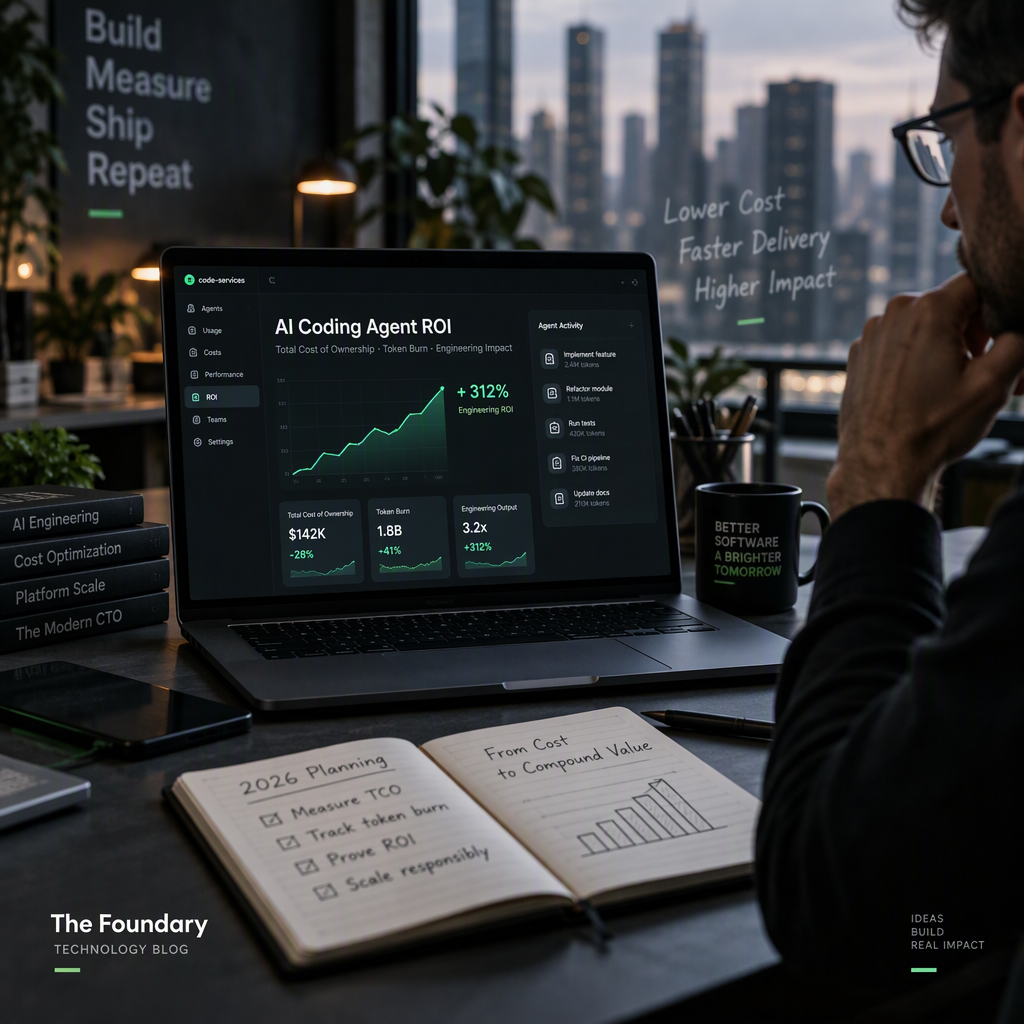
    You need to measure your ai coding agent roi with finance-ready formulas and token cost benchmarks for enterprise teams in 2026. Recent reports show token spending jumped from under $50 per year to $1,000 in a single day as agents became reliably useful. Companies must now budget carefully for total cost of ownership beyond just subscription fees. This guide explains how to track every dollar and prove value to your leadership team.

    The 2026 Token Spending Spike

    On September 28, 2026, Simon Willison reported at the WeAreDevelopers World Congress that AI token spending jumped from under $50 per year to $1,000 in a single day as coding agents became reliably useful. This shift means budgeting for AI tools cannot be static, with spending potentially spiking 20x or more in days rather than quarters. Many organizations were caught off guard by these costs. It is now necessary to have automated governance to prevent unexpected charges from draining your quarterly IT budget.

    This trend highlights a critical change in how AI is consumed. Previously, you might have estimated monthly fees based on seat counts. Now, usage can fluctuate wildly based on development cycles. If your team launches a complex feature, token consumption could double overnight. Without real-time monitoring, this volatility creates financial risk. You must adopt a dynamic view of your technology spend to manage these new realities effectively.

    Total Cost of Ownership for AI Tools

    Your total cost of ownership goes beyond subscription fees. Token consumption accounts for roughly one-third of total AI agent costs, with the remaining two-thirds coming from infrastructure, governance, organizational change, and regulatory compliance. A study by EY as of September 24, 2026 confirmed this breakdown. You cannot look at the invoice from your vendor and assume that is your only bill.

    Enterprise AI governance platform spending is projected at $492 million in 2026, climbing past $1 billion by 2030. This means investing in a platform to enforce limits is now standard practice. Custom AI coding agent development costs range from $10,000, $30,000 for a proof of concept and $60,000, $150,000+ for enterprise implementation. If you choose to build rather than buy, factor in maintenance, model retraining, and security audits. All these elements combine to form the real price tag on your initiative.

    ai coding agent roi Calculation Methods

    To justify your budget, you need a clear formula. Agentic AI ROI requires a comprehensive (Benefits, Costs) / Costs formula integrating hard labor savings and soft productivity gains, with typical payback periods of six months. This approach aligns your engineering metrics with finance expectations. When calculating ai coding agent roi, you must separate infrastructure costs from token costs to avoid double counting or missed savings.

    Three in four enterprises cannot confidently prove AI business outcomes to the CFO, with 43% citing ROI proof as their single largest AI cost challenge. This gap exists because many teams measure output volume rather than economic value. You need to track first-pass acceptance rate and cycle time reduction alongside token spend. By linking efficiency gains to revenue or saved hours, you create a defensible business case for future investment.

    Platform Pricing and Performance Comparison

    Selecting the right tool impacts your cost structure significantly. Aider offers the lowest cost-per-task at $0.03 but requires model selection management. Claude Code averages $13 per developer per active day for enterprise deployments. GitHub Copilot Enterprise costs $39 per user monthly with deep IDE integration. Tabnine provides on-prem deployment options for regulated environments at $59 per user monthly.

    Platform / Vendor Pricing Model Per-Developer Monthly Cost Key Strength Best For
    Claude Code Subscription + API $20 to $200 Strong context Agentic coding tasks
    Cursor Subscription $20 to $40 Multi-file editing Complex projects
    GitHub Copilot Subscription $10 to $39 IDE integration Broad support
    Tabnine Subscription $39 to $59 On-prem deployment Regulated environments
    Aider Open Source + BYOK $30 to $80 Lowest cost-per-task Budget-conscious teams

    Table sources: Kunal Ganglani (Sept 16, 2026) and AI Coding Tools Pricing (Sept 6, 2026). Note that enterprise contracts often differ from public pricing. Contact vendors directly for volume discounts that may lower these baseline rates.

    Deployment Steps for Measurement

    Follow a structured timeline to avoid spending waste. First, establish baseline human task times in weeks one and two. Next, select tools and define your stack in week three. Deploy governance in weeks four and five. Pilot and instrument the system for weeks six through eight. Measure ROI in weeks nine through twelve. Finally, scale and optimize ongoing. This approach ensures you capture data at every stage.

    1. Establish Baseline (Weeks 1 to 2): Document the human baseline for every task the AI will handle, process times, error rates, and fully loaded cost per task.
    2. Select Tools & Define Stack (Week 3): Choose tools based on use case and integrate with existing SSO/identity.
    3. Deploy Governance (Weeks 4 to 5): Implement runtime AI governance with budgets, rate limits, and guardrails at the request path level.
    4. Pilot & Instrument (Weeks 6 to 8): Deploy to small team, track first-pass acceptance rate, cycle time, and cost per accepted change.
    5. Measure ROI (Weeks 9 to 12): Calculate realized business value minus Total Cost of Ownership, including build, inference, infrastructure, review, and maintenance.
    6. Scale & Optimize (Ongoing): Segment results by repository and task type and apply token optimization strategies.

    These steps come from Elementum AI, GetMaxim AI, and ISHIR research published in September 2026. They provide a realistic path to financial justification. Do not skip the baseline step or you will have no comparison point for your efficiency gains.

    Token Optimization and Governance

    Runtime AI governance tools are required for enterprises running mission-critical AI workloads. Bifrost and Kong AI Gateway lead in the request path enforcement category. You should define token ownership early to reduce waste. Defined tokenomics ownership makes organizations 3.7x more likely to show value to CFOs according to Visual One Intelligence data from September 24, 2026.

    Apply token optimization strategies like Sonar Vortex for up to 36% lower token consumption. This requires tracking usage by repository and task type. SonarSource reports in September 2026 that this segmentation helps identify high-cost patterns. You might find specific teams generating unnecessary tokens through repetitive loops. Blocking these patterns reduces spend without slowing down productive work. Governance does not have to block innovation if designed correctly.

    Reporting Results to Finance

    When presenting data, focus on hard labor savings. Finance teams care about payback periods and risk mitigation. You can cite that 88% of agentic adopters see ROI in year one compared to 94% of enterprises getting no earnings from AI overall. Beam AI published this statistic on September 1, 2026. It highlights that success depends on implementation method rather than just adoption.

    Use clear tables to show cost components. Break down token spend versus infrastructure spend versus governance spend. This transparency builds trust with your leadership. If costs rise, show exactly where they rose and why. This detail proves you have control over the platform. It turns a vague expense into a managed strategic investment.

    Scaling Your AI Coding Strategy

    As you grow, your needs change. You may move from subscription models to custom builds. Custom AI coding agent development costs range from $10,000, $30,000 for a proof of concept and $60,000, $150,000+ for enterprise implementation. This path is expensive but allows deeper integration. Consider this only if standard tools cannot meet your compliance needs.

    You should link your broader digital transformation to this initiative. For foundational work, see the The Foundary, Engineering Digital Foundations page. This will help you align code generation with your overall platform strategy. It ensures consistency across your technical landscape and supports your long-term goals.

    Long Term Maintenance Considerations

    Long-term maintenance cost trajectories for AI agents beyond year one remain uncertain. Most available data is from mid-market or tech-first companies. You should plan for model updates and regulatory compliance costs. The EU AI Act and NIST AI RMF implementation costs vary significantly by region.

    Training and change management cost benchmarks are also variable. Do not assume adoption is free. You must budget for workshops and documentation. If you ignore these hidden costs, your ROI projections will fail. Use this guide to stay ahead of those financial shifts.

    Ensure your team understands the terms of our services by reviewing the Privacy Policy and Terms of Use. These documents outline your rights and responsibilities regarding data processing and platform usage.

    Talk to a Foundry engineer

    Start a conversation with The Foundary about your platform or AI project today. Talk to The Foundary about your build

    Conclusion

    You have learned how to calculate ai coding agent roi using a finance-ready formula that accounts for total cost of ownership. By tracking token burn and governance costs, you can prove value to your CFO. This approach helps you budget correctly for the unpredictable nature of agentic AI.

    Frequently Asked Questions!

    1. How do I calculate AI agent ROI when token fees are only part of the total cost?

    Use the (Benefits, Costs) / Costs formula including infrastructure and governance costs. EY data from September 2026 shows tokens are only one-third of total costs.

    2. What is the cheapest AI model for coding agents in 2026 that still produces reliable results?

    Aider offers the lowest cost-per-task at $0.03 per task. It requires BYOK but is cheaper than enterprise options like Claude Code or Copilot.

    3. How can I track AI token spending per developer per project?

    Use runtime AI governance tools like Bifrost or Kong AI Gateway. Segment results by repository and task type to identify cost drivers.

    4. What metrics should I present to my CFO to justify AI tool spend?

    Present hard labor savings and first-pass acceptance rates. Define token ownership to show you have control over costs and reduce risk.

    5. How do I set up AI governance without slowing down developer velocity?

    Implement rate limits and guardrails at the request path level. Use tools like Sonar Vortex to optimize tokens without blocking legitimate work.

    6. What is the typical ROI timeline for enterprise AI coding agent deployments?

    Typical payback periods are six months. Most adopters see ROI in year one according to Beam AI data from September 2026.

    By the Foundry Engineering Team · Updated 2026-09-30


  • AI Red Teaming Enterprise Strategy Guide for 2026

    AI Red Teaming Enterprise Strategy Guide for 2026

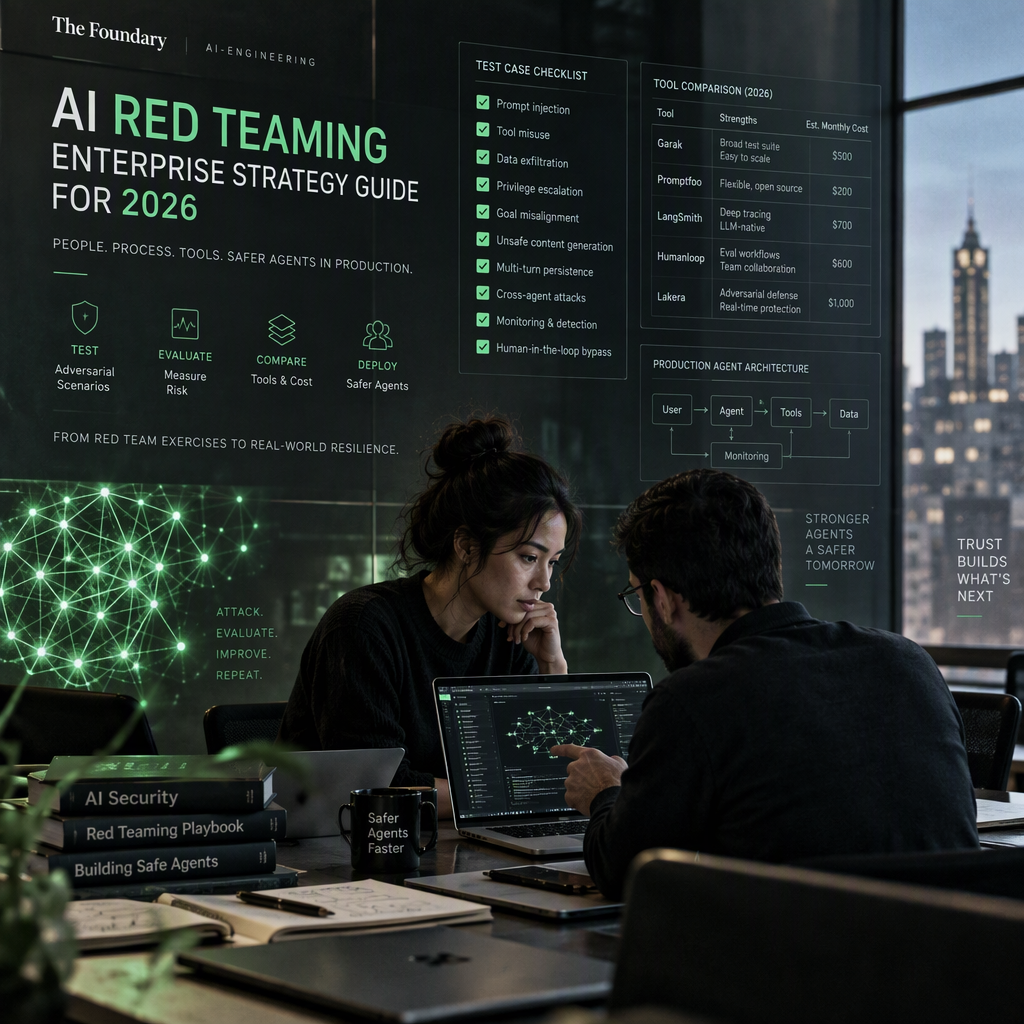
    You need ai red teaming enterprise strategies now. The regulatory landscape changed when the EU AI Act enforcement deadline arrived on August 2, 2026. Organizations deploying high-risk systems must implement documented risk management or face fines up to €15 million. IBM reports AI-enabled breaches cost an average of $6 million in 2026. This financial risk makes adversarial testing mandatory rather than optional for your team.",

    Why Compliance Drives AI Red Teaming Enterprise Demand

    The EU AI Act now requires providers to implement automatic logging and technical documentation. Articles 11 and 12 mandate record-keeping for high-risk system operations as of August 2, 2026. Non-compliance risks fines of up to €15 million or 3% of global annual turnover. This enforcement shifts adversarial testing from a best practice to a budget line item. You cannot launch high-risk agents without a valid testing regimen.",

    ai red teaming enterprise Standards

    Industry standards define what a reliable testing program looks like. Teams map findings to the OWASP Top 10 for LLM Applications and MITRE ATLAS. These frameworks help you identify common vulnerabilities like prompt injection and indirect prompt injection. Open-source tools often include built-in mappings to these standards out of the box. You can use these mappings to ensure comprehensive coverage across your agent interfaces. Mindgard Blog explains how offensive security platforms automate this mapping.",

    Tool Selection for Production Agents

    Choosing the right tools depends on your integration needs. You should prioritize solutions that fit into your CI/CD pipelines to catch issues early. Check out HKLAW Insights for detailed compliance timelines before you begin. The following platforms offer distinct capabilities for different testing phases.

    Platform Type Best For Pricing Model
    Mindgard Commercial SaaS Pre-launch and continuous red teaming Enterprise Quote
    Lakera / Check Point Commercial API Runtime guardrails and injection detection Free Tier + Quote
    Garak Open Source LLM vulnerability scanning Free
    Promptfoo Open Source CI/CD integration and regression testing Free + Enterprise

    Garak and Promptfoo are free options that support open-source workflows. Mindgard and Lakera provide enterprise support and deeper integration features. Your engineering team might prefer open-source tools if they have Python expertise. Commercial platforms often reduce maintenance overhead through managed services.",

    Enterprise AI Security Testing Costs

    Costs vary significantly based on whether you build or buy solutions. Manual red team assessments by US professionals cost $59 to $84 per hour. A typical two to six week engagement ranges from the low five figures to the low six figures. Contractors average around $67.60 per hour for these specialized tasks. You must also account for the total compensation of full-time red teamers. According to ZipRecruiter data, US red teamers earn between $80,000 and $220,000 annually.

    Approach Estimated Cost Effort Required
    Build (Open Source) Salary $80k-$220k High maintenance and expertise
    Buy (Commercial) Manual testing starts at $5k-$15k per engagement Automation compresses costs

    Automating security operations can cut breach costs by an average of $2 million. Investing in automated tools allows your team to test more frequently. Manual testing remains necessary for complex human oversight scenarios. You should mix both approaches to balance cost and depth.",

    Implementation Steps and Timeline

    You can follow a structured process to deploy a red team program effectively. Start by cataloging your systems and classifying them against EU AI Act categories. Then select a primary tool based on your budget and internal skills. This timeline helps you meet compliance deadlines efficiently.

    1. Inventory & Classification: Week 1 to 2
    2. Tool Selection: Week 3
    3. Baseline Scanning: Week 4
    4. Integration: Week 5 to 6
    5. Documentation: Week 7
    6. Human Oversight Design: Week 8
    7. Ongoing Monitoring: Quarterly

    Each step requires specific outputs like technical documentation or logging configurations. Article 26 of the AI Act requires deployers to retain logs for at least six months. Ensure your tool selection supports long-term data retention requirements.",

    Handling Skills and Talent Gaps

    Your team needs specific skills to operate modern security tools effectively. Proficiency in Python or TypeScript is required for using open-source tools like Garak. You also need familiarity with LLM architecture and RAG security. Mappings to compliance frameworks like NIST AI RMF are essential for audits. If you lack internal staff, you may rely on external contractors. External resources can fill gaps during peak compliance periods.",

    Business Case and ROI

    Demonstrating value to the CFO requires clear financial metrics. The average cost of an AI-enabled breach is $6 million as of 2026. A controlled testing expense of $5,000 to $100,000 provides a significant return on investment. Organizations using AI in security operations cut breach costs by an average of $2 million. You should highlight these savings in your budget requests. Protecting your reputation is also a critical intangible benefit.",

    Pitfalls to Avoid

    Several common mistakes can undermine your testing program. Relying only on static analysis fails to catch runtime vulnerabilities. Ignoring human oversight requirements exposes you to non-compliance risks. Using outdated benchmarks like those before 2025 leads to false security. Ensure your testing covers the latest attack vectors found in MITRE ATLAS. Regular updates to your threat model keep your defense relevant over time.",

    Future Outlook for Adversarial Testing

    The tools in this space will continue to evolve rapidly. Promptfoo gained significant attention after its acquisition by OpenAI in March 2026. Microsoft’s PyRIT framework was archived in March 2026, shifting focus to active projects. You must monitor these changes to maintain a modern security posture. Staying current with new vendors ensures you use the best available technology.

    Talk to a Foundry engineer

    Tell us about your AI platform or security project. Talk to The Foundary about AI

    Conclusion

    The path forward requires treating AI red teaming as a core operational function rather than an add-on. By aligning with established frameworks like OWASP and MITRE you ensure your defenses are comprehensive. Your team should prioritize tools that automate routine checks while preserving human oversight for complex cases. These steps will help you mitigate financial risks and meet strict regulatory requirements.

    Frequently Asked Questions!

    1. How do I handle EU AI Act compliance for AI agents deployed outside the EU but serving EU users?

    The EU AI Act applies if your high-risk systems are used by entities in the EU. You must implement the required risk management and logging controls regardless of physical server location.

    2. What is the difference between a red team and runtime guardrails?

    Red teaming involves proactive adversarial testing to find vulnerabilities before deployment. Runtime guardrails monitor live traffic to block attacks as they happen. Both are recommended for complete protection.

    3. How do I validate that my red teaming tool covers OWASP Top 10 2025 risks adequately?

    Check if your tool maps findings to OWASP Top 10 for LLM Applications. Vendors often publish reports showing this alignment.

    4. What is the cost impact of open-source tools like PyRIT after its archiving in March 2026?

    Archived tools like PyRIT may lack updates. You should migrate to active open-source alternatives like Garak or Promptfoo to ensure support.

    5. How do I calculate the ROI of AI red teaming to justify budget to the CFO?

    Compare the cost of testing against the average AI breach cost of $6 million. Highlight potential savings from automated security operations.

    6. Which AI red teaming tools are approved for self-hosted or air-gapped environments?

    Open-source tools like Garak and Promptfoo are best for self-hosted environments. Commercial solutions may offer on-prem options upon enterprise request.

    By the Foundry Engineering Team · Updated 2026-09-30


  • How to Build Enterprise MCP Server Implementation Safely

    How to Build Enterprise MCP Server Implementation Safely

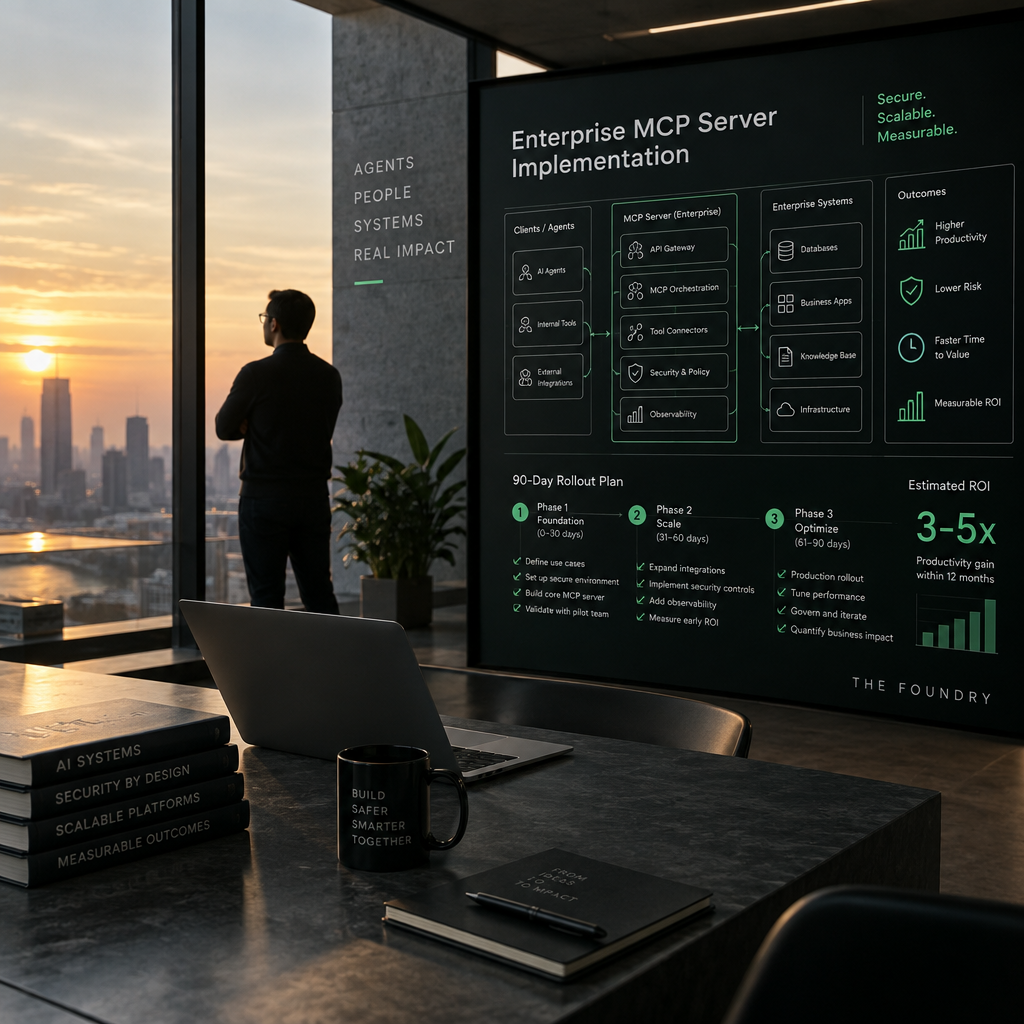
    Enterprise mcp server implementation requires a structured approach to connecting AI models to enterprise tools. As agentic systems grow, security and governance become critical priorities. Palma.ai recently raised funding to address this need in the market. You must prioritize architecture and authentication from day one of your project.

    The New Governance Landscape

    Engineering teams now face board-level concerns about AI agent governance. On September 28, 2026, Palma.ai announced $1.8 million in pre-seed funding. This capital will support governance layers for MCP-connected AI agents. Investors include D11Z and executives from major tech firms. You should treat MCP governance as a key risk management task.

    The Model Context Protocol specification now includes stateless core features. Version 2026-07-28 removes session handshakes. This change enables load balancer-based scaling without sticky sessions. Your architecture team must account for this shift in state management. It simplifies horizontal scaling but requires careful client design. Refer to the MCP specification for details.

    Core Architecture Primitives

    Enterprise MCP deployments rely on three core primitives. Resources are read-only data accessed by models. Tools represent executable actions that agents can invoke. Prompts serve as reusable templates for standardized interactions. All operate over JSON-RPC 2.0 as the transport layer.

    You need to define these primitives clearly before development. Tools are exposed via the tools/list and tools/call methods. Schema validation is mandatory for all inputs to prevent errors. This ensures that downstream enterprise systems process data safely. Use the SDK decorators to register these resources efficiently.

    Security and Authentication Controls

    Security remains the primary concern for any enterprise mcp server implementation. You must implement OAuth 2.1 with PKCE for remote deployments. TLS 1.3 is recommended for all connections to ensure encryption. Static API keys are still used by over half of servers. The OWASP MCP Top 10 identifies credential management as a leading risk.

    Avoid relying on static credentials for production workloads. Use enterprise identity providers like Okta or Azure AD for SSO. Integrate a secrets manager such as AWS Secrets Manager or HashiCorp Vault. Audit logging must have a minimum retention of 90 days. This supports SOC 2 Type II and HIPAA compliance requirements.

    MCP Gateway Architecture Design

    A reliable mcp gateway architecture requires three core components. The authentication layer validates OAuth 2.1 tokens using your IdP. The routing layer maps tool namespaces to specific backend servers. The observability layer handles structured logs and metrics. OpenTelemetry or SIEM tools work well for this purpose.

    Token optimization is essential when connecting multiple servers. Bifrost Code Mode can reduce input token usage by up to 92.8%. This savings becomes significant when connecting 16 or more MCP servers. Plan your gateway to handle these optimizations automatically. Read more about The Foundary, Engineering Digital Foundations for broader context.

    Step by Step Process

    You should follow a phased rollout plan to ensure stability. Start with foundation setup before building the first server. Hardening occurs in the middle weeks before production deployment. This timeline helps manage technical debt and security risks effectively.

    Weeks 1-2 focus on foundation tasks. Set up enterprise identity provider integration first. Configure secrets manager and deploy MCP gateway infrastructure. Establish network isolation and TLS 1.3 configuration during this time.

    Weeks 3-4 involve building the first server. Use FastMCP for Python or typescript-sdk for TypeScript. Define tools, resources, and prompts using SDK decorators. Test locally using MCP Inspector to debug connection issues.

    Weeks 5-6 prioritize gateway hardening. Configure rate limiting and DLP scanning on the gateway. Implement tool allow-listing and RBAC policies for access. Set up structured audit logging with at least 90 days of retention.

    Weeks 7-12 cover the production rollout. Containerize MCP servers using Docker base images. Deploy to Kubernetes with Horizontal Pod Autoscaler. Enable CI/CD pipeline with security scanning steps.

    Cost Analysis and ROI

    Your budget should account for build versus buy decisions. Building custom servers costs $16,000 to $32,000 upfront. Maintenance adds another $6,000 to $13,000 yearly. Managed solutions often start at $29 to $499 monthly. Free tiers exist for open source options like TrueFoundry.

    Platform Deployment Auth Catalog Pricing Best For
    Bifrost Self-hosted OAuth 2.0 Virtual MCPs Open source Enterprise governance
    Composio Managed cloud End-user OAuth 1,000+ toolkits Free tier Developer-first integration
    Microsoft MCP Gateway Kubernetes Bearer token Bring your own Free Azure teams
    Docker MCP Gateway Containers Credential injection Docker Catalog Free Local environments

    TrueFoundry Pro Plus includes SSO and compliance features. It costs $499 monthly for professional tiers. Infrastructure costs vary based on your cloud provider. Cloudflare Workers offer a free tier covering 100,000 requests daily. Evaluate your expected query volume before selecting a host.

    Scaling and Observability

    Scaling horizontally without sticky sessions is now easier. The stateless protocol core enables standard load balancing. You can use Kubernetes Horizontal Pod Autoscaler for dynamic scaling. This adjusts capacity based on real-time request metrics. Ensure your gateway handles load distribution correctly.

    Observability is critical for identifying bottlenecks early. Use structured logs to track tool invocations and latency. Monitor token usage to manage operational costs effectively. Alert your team on authentication failures or schema errors. These metrics support your reliability goals.

    Supply Chain Security Requirements

    Supply chain security prevents compromised servers from entering your network. Static application security testing should run on all code. Vulnerability scanning checks dependencies for known flaws. Cryptographic verification ensures server integrity before deployment. These steps protect your agentic AI systems from external threats.

    Docker provides container-based isolation for local deployments. Kubernetes adds another layer of runtime protection in production. Keep base images updated to avoid security issues. This maintains your trust boundaries between internal and external systems. Review the Privacy Policy for data handling details.

    Talk to a counsellor

    Start a conversation with The Foundary about your platform or AI project. Our team can help you design and deploy secure MCP gateways for your needs. Reach out today to discuss your architecture requirements.

    Talk to The Foundary about AI

    Conclusion

    Building a secure MCP server requires careful planning and strict adherence to standards. You must implement OAuth 2.1, TLS 1.3, and proper audit logging from the start. Follow a phased rollout to manage risks and ensure compliance. This disciplined approach protects your enterprise data while enabling agentic AI growth.

    Frequently Asked Questions!

    1. How do I migrate from stdio transport to Streamable HTTP?

    You must update client libraries to support HTTP transport. Ensure your gateway handles session state correctly during the switch. Test connectivity thoroughly before decommissioning local streams.

    2. What is the recommended approach for long-running tool calls?

    Use streaming responses or background job patterns. You should implement webhooks to notify clients upon completion. This avoids timeout errors during execution.

    3. How do I implement per-user OAuth 2.1 flows?

    Configure the IdP to issue tokens tied to user identity. Validate the user scope in your gateway policies. This ensures agents act only within approved boundaries.

    4. What controls prevent confused-deputy attacks?

    Enforce strict RBAC and tool allow-listing on the gateway. Verify caller identity at every request layer. This limits what any single component can access.

    5. How do I scale MCP servers without sticky sessions?

    Use a stateless protocol core and standard load balancers. Avoid storing session data on server instances. This allows any node to handle any request.

    6. How do I implement human-in-the-loop approval gates?

    Integrate a workflow system for destructive operations. Require explicit token approval before executing actions. This adds a critical safety check for sensitive tasks.


  • AI Agent Governance Platform Guide for 2026 Enterprises

    AI Agent Governance Platform Guide for 2026 Enterprises

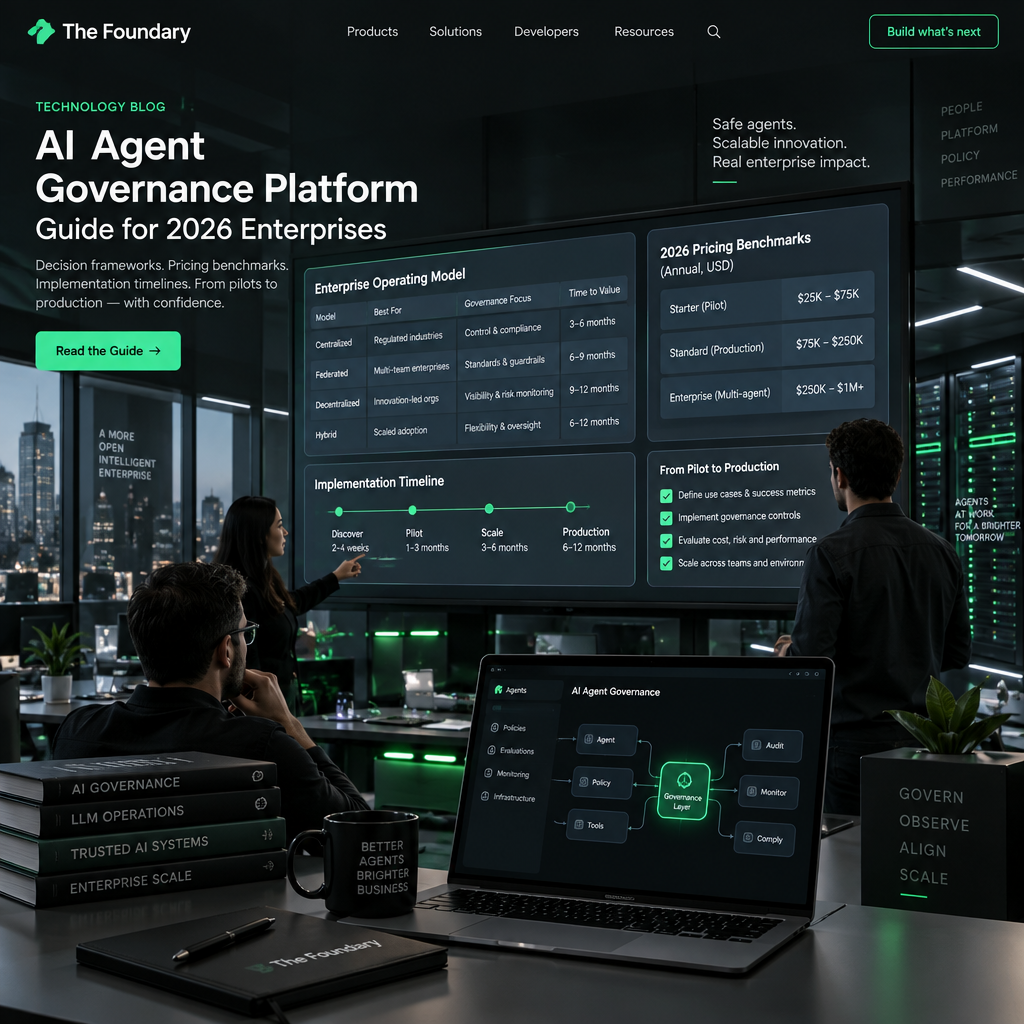
    Today marks a key moment for the enterprise AI landscape as Nvidia launched the Open Agent Safety Platform on September 28, 2026. This new release joins existing solutions from Broadcom, Salesforce, and Microsoft in a rapidly evolving market. Choosing the right ai agent governance platform is now critical for safety and compliance. You need a system that protects data while enabling innovation across your stacks.

    Market Context and Recent Launches

    The competitive environment tightened significantly in the last two weeks of August and early September. Four major governance platforms shipped standalone products within the same narrow window. Broadcom AgentMinder arrived on August 31 at VMware Explore 2026. Shortly after, Microsoft Agent 365 and Salesforce Agentforce 360 solidified their positions. Nvidia joined this group on September 28. This clustering shows vendors recognize the immediate need for control in production environments.

    Technical Requirements for Runtime Enforcement

    Successful deployment relies on specific infrastructure capabilities. Runtime enforcement requires a cloud-native AI gateway or service mesh that sits between agents and enterprise resources. Hardware-based monitoring like Nvidia Sentry requires BlueField-4 DPUs or equivalent DPU infrastructure. You must also ensure integration with existing identity systems. This binding ensures agent identities match their declared intents and missions. OpenTelemetry support is mandatory for observability and audit trail export.

    Implementation Timeline and Steps

    A structured rollout reduces risk during deployment. Follow this roadmap to integrate governance effectively.

    1. Discovery and Inventory (Weeks 1 to 2): Run agent discovery using OpenTelemetry instrumentation and document all agents in a centralized registry.
    2. Policy Definition (Weeks 3 to 4): Define least-privilege permissions and write policy-as-code using your platform’s expression language.
    3. Runtime Enforcement Deployment (Weeks 5 to 8): Deploy the control plane in staging and enable OpenTelemetry-based audit logging.
    4. Compliance Integration (Weeks 9 to 10): Configure audit trail fields to match strictest applicable framework retention requirements.
    5. Production Rollout (Weeks 11 to 12): Enable enforcement with human-in-the-loop approval for high-risk actions and schedule quarterly reports.

    Pricing Benchmarks and Licensing Models

    Costs vary significantly across vendors and deployment models. Per-user licensing models require budgeting for 500 to 5,000 users at $12, $15 per user monthly annually. Microsoft Agent 365 costs $15 per user per month when paid yearly. IBM watsonx.governance offers a free Lite tier, but Basic starts at $3,500 per month. Enterprise platforms like Arthur AI and Zenity typically require custom pricing. Implementation costs for Salesforce Agentforce deployments typically range from $150,000 to $600,000 in year one.

    Platform Vendor Pricing Model Key Capabilities
    Broadcom AgentMinder Broadcom Contact sales Runtime enforcement, AuthZEN integration
    Microsoft Agent 365 Microsoft $15/user/month Entra Agent ID, Purview integration
    IBM watsonx.governance IBM Free Lite to $42,000+ Model management, compliance mapping
    Arthur AI Arthur Free to Custom Mixed-cloud discovery and policy
    Salesforce Agentforce Salesforce Per action or $125, $550/user Einstein Trust Layer, Data Cloud grounding

    Evaluating Your ai agent Governance Platform

    Selecting a vendor depends on your operating model and existing stack. If you operate in a Microsoft-centered estate, Agent 365 integrates smoothly with Entra and Purview. For regulated inventories, IBM watsonx.governance offers reliable model management. Organizations seeking full-stack governance with hardware enforcement might look to Nvidia. The ai agent governance platform must handle specific constraints such as hardware watchdogs or cloud-native gateways. Ensure the solution supports your required identity standards like AuthZEN or Entra ID.

    Compliance and Audit Trail Requirements

    Regulatory frameworks dictate minimum retention periods. The EU AI Act Article 12 requires high-risk AI systems to record events over the system lifetime with a minimum six-month retention. SOX-relevant systems require 366 days of operational logs and seven years of audit work papers. HIPAA requires six years of PHI access logs. You must configure tamper-evident, append-only storage with cryptographic integrity verification to meet these demands. Audit trails should include timestamp, decision ID, human identity, model version, and downstream actions.

    Build versus Buy Decisions

    Deciding to build or buy affects long-term costs. Building a custom control plane using OpenTelemetry and Kubernetes requires 6 to 12 months engineering effort at 4 to 8 FTEs. The implementation cost ranges from $500,000 to $2 million. Buying enterprise platforms typically requires $50,000 to $250,000 annually plus implementation fees. Microsoft Agent 365 at $15 per user is most predictable for M365-heavy estates. Early deployments show payback through reduced security incident response time and audit preparation effort. Full ROI requires mature agent fleets with measurable business outcomes.

    Security Considerations for Control Planes

    Security policies must enforce boundaries at runtime. Agents must be quarantined if they violate intent-based policies. This enforcement happens within milliseconds using specialized hardware like BlueField-4 DPUs. Your team needs identity and access management expertise for binding agent identities. Cloud-native Kubernetes deployment skills are also essential for control plane installation. Policy-as-code authoring ensures consistency across your environment. We help teams build these foundations at The Foundary. Always ensure you review our Privacy Policy when sharing enterprise data.

    Talk to a counsellor

    Start a conversation with The Foundary to discuss your platform architecture. We help engineering teams evaluate options and deploy governance controls. Let us assist with your AI infrastructure.

    Talk to The Foundary about your product

    Conclusion

    Navigating the 2026 market requires clear criteria for vendor selection and deployment. Focus on your existing stack and compliance needs to guide your choice. Investing in an ai agent governance platform is essential for secure scaling.

    Frequently Asked Questions!

    1. Does OpenShell require Nvidia hardware or can it run on Arm Intel systems?

    OpenShell is an open-source secure runtime that sets boundaries for agents. While Nvidia Sentry hardware monitoring requires BlueField-4 DPUs, the runtime itself is flexible.

    2. What is the typical latency impact of running a runtime enforcement gateway in front of agents?

    Public benchmarks comparing runtime enforcement overhead across platforms are limited. Vendors claim millisecond-level quarantine capabilities on specialized hardware.

    3. How do I migrate existing agent deployments built on LangChain to a governed control plane?

    Migrate by defining least-privilege permissions and configuring identity binding in Phase 2. Use the control plane to manage traffic in production.

    4. What audit trail fields are absolutely required for EU AI Act high-risk systems?

    EU AI Act Article 12 requires automatic recording of events over the system lifetime with six-month retention. Logs must include decisions and system state.

    5. Are there industry certifications for these governance platforms themselves?

    Vendor-specific compliance certifications like SOC 2 Type II are not verified for all platforms. Ask vendors directly for their latest audit reports.

    6. What happens when an agent fails a policy check during production?

    You can configure the policy to block the action entirely or notify a human for approval in high-risk scenarios.


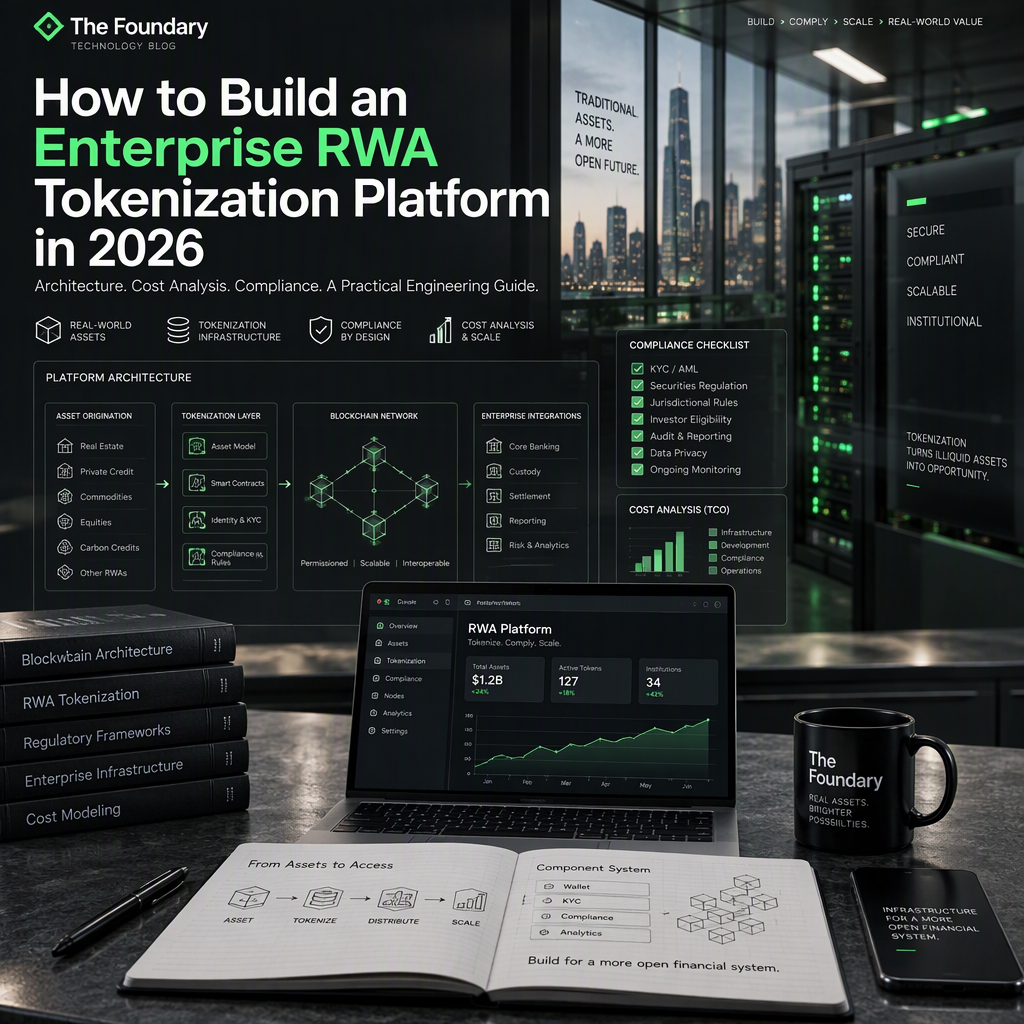
  • How to Build an Enterprise RWA Tokenization Platform in 2026

    How to Build an Enterprise RWA Tokenization Platform in 2026

    The rise of an enterprise rwa tokenization platform marks a shift in financial infrastructure following recent regulatory updates. DTCC and the CFTC signaled clear pathways for digitizing assets in late September 2026. You need to understand how to engineer systems that meet these new standards without compromising on security or speed.

    Regulatory Signals in September 2026

    Recent announcements have clarified the path for institutions. The DTCC will launch its Tokenization Service in October 2026 covering $114 trillion in assets. This move follows guidance from the CFTC released on September 24, 2026. Their update confirms that blockchain can satisfy recordkeeping requirements under existing regulations. These changes reduce uncertainty for teams building production systems.

    Designing Your Technical Architecture

    You must select a blockchain and token standard that aligns with your compliance needs. ERC-3643 is recommended for security tokens requiring identity verification. This standard includes components like the Identity Registry and Compliance Module. You can explore foundational engineering concepts on the The Foundary site. Ensure your stack supports oracle feeds for net asset value data.

    Understanding ERC-3643 Compliance

    The ERC-3643 standard typically takes 8-14 weeks to deploy from specification to mainnet. It consists of four core smart contract components. These include the Token Contract and Claim Issuers. Detailed guides explain how to implement these contracts safely. Using this standard helps enforce transfer restrictions automatically.

    Cost Analysis and Budget Planning

    Budgeting for infrastructure requires accounting for legal and technical expenses. Legal structuring via an SPV can cost between $100,000 and $300,000. Smart contract audits range from $50,000 to $200,000. Custody integration adds another $50,000 to $200,000. These figures help you plan your initial capital requirements.

    Build Versus Buy Decisions

    Deciding to build or buy depends on your asset diversity. Custom development costs start at $500,000 and take 12 to 24 months. White-label platforms cost between $100,000 and $500,000. Infrastructure tokens cost between $50,000 and $200,000. Choose the model that fits your timeline and budget constraints.

    Implementation Roadmap

    Follow these steps to launch your system efficiently.

    1. Select jurisdiction and SPV structure in Phase 1.
    2. Design token contracts with identity registry in Phase 2.
    3. Develop smart contracts including compliance modules in Phase 3.
    4. Integrate KYC providers and configure rules in Phase 4.
    5. Conduct security audits and testnet flow in Phase 5.
    6. Deploy to production and begin onboarding in Phase 6.

    Platform Comparison Overview

    Platform Best For Compliance Architecture Primary Chains
    Securitize US-registered funds Transfer agent + broker-dealer Ethereum, Polygon
    Tokeny Compliance infrastructure ERC-3643 identity/compliance EVM
    Ondo Finance Tokenized Treasuries SEC-registered advisor Ethereum, Solana

    Risk Management Strategies

    You should establish clear controls for custody and secondary trading. Use HSM or MPC key management for secure private key storage. Secondary trading must be restricted to whitelisted investors. Monitor network upgrades to maintain contract compatibility. Always keep off-chain identity storage separate from on-chain attestations.

    Future Market Outlook

    Institutions expect widespread adoption by 2030. McKinsey projects a tokenized market cap of $2-4 trillion. Standard Chartered forecasts $30 trillion by 2034. Current on-chain RWA holdings stand at $37.89 billion. These numbers indicate strong demand for compliant infrastructure.

    Conclusion of Technical Requirements

    Building a secure system requires careful planning and adherence to standards. Focus on legal structuring and smart contract security. Regular audits and updates will keep your platform compliant. The right architecture supports long-term growth and trust.

    Common Technical Questions

    Does ERC-3643 require off-chain identity storage? Yes, it relies on attestations rather than storing data directly on-chain. How do you handle NAV feeds? Use decentralized oracle networks with circuit breakers. What about secondary trading? Transfers are limited to whitelisted wallets by default.

    Talk to a counsellor

    Contact The Foundary to discuss your blockchain platform needs. Our team can help you design and scale compliant solutions. Start a conversation about your specific project requirements today.

    Talk to The Foundary about blockchain

    Conclusion

    Building a secure system requires careful planning and adherence to standards. Focus on legal structuring and smart contract security. Regular audits and updates will keep your platform compliant. The right architecture supports long-term growth and trust. Stay informed on regulatory changes to maintain operational resilience.

    Frequently Asked Questions!

    1. Does ERC-3643 require off-chain identity storage?

    Yes, it relies on attestations rather than storing data directly on-chain. This approach protects sensitive personal information while maintaining compliance.

    2. How do you handle NAV feeds?

    Use decentralized oracle networks with circuit breakers. These ensure data accuracy and prevent manipulation during market volatility.

    3. What about secondary trading?

    Transfers are limited to whitelisted wallets by default. This restriction maintains regulatory compliance for security tokens.

    4. What are the primary legal costs?

    Legal structuring via an SPV typically costs between $100,000 and $300,000. This is often the largest line item in your budget.

    5. How long does ERC-3643 take to deploy?

    Deployment typically takes 8-14 weeks from specification to mainnet. This timeline includes security audits and testing.

    6. What is the total market cap projection?

    McKinsey projects $2-4 trillion by 2030. Standard Chartered forecasts $30 trillion by 2034.


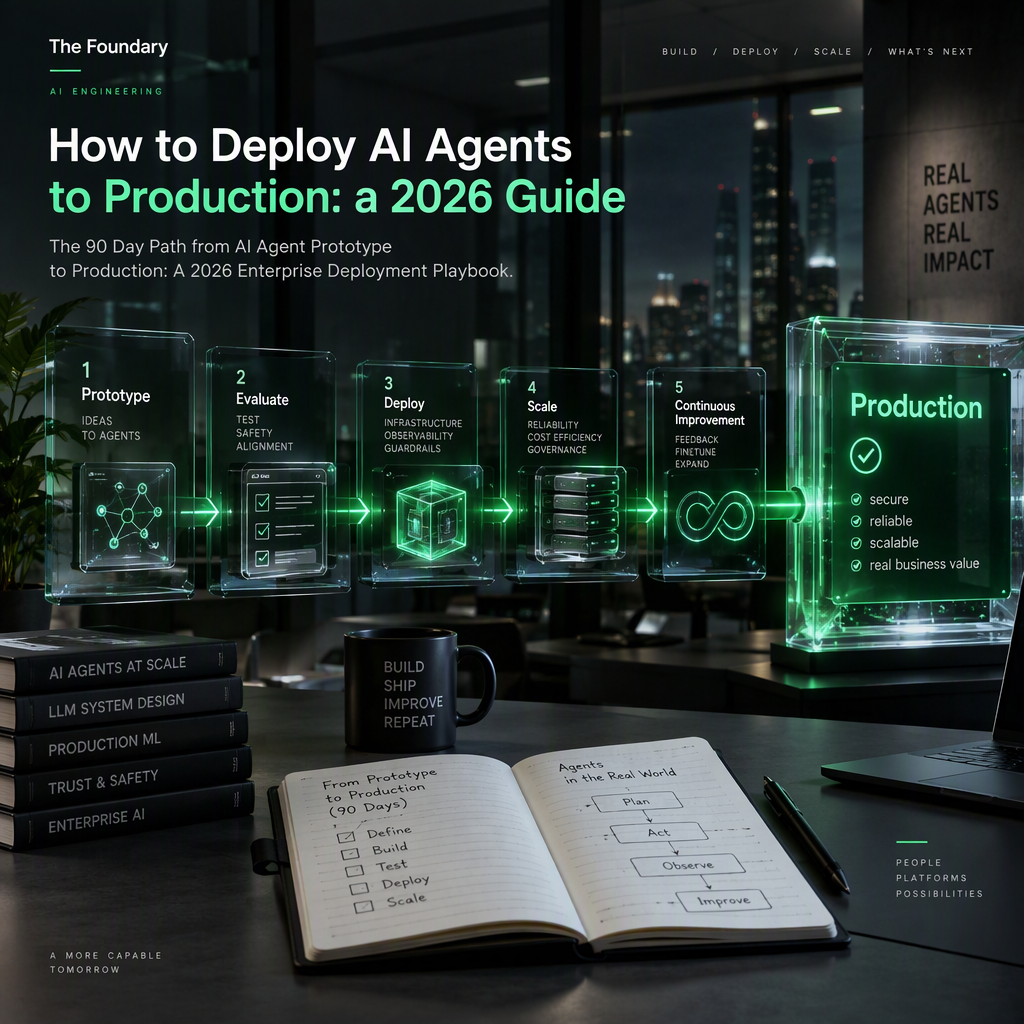
  • How to Deploy AI Agents to Production: a 2026 Guide

    How to Deploy AI Agents to Production: a 2026 Guide

    To deploy ai agents to production, you need a clear plan beyond just building a model. Recent data shows 86% to 88% of enterprise pilots never graduate to full scale. Only 11% of organizations have production-ready agentic systems. This guide covers the steps to bridge that gap with measurable gates and controls.

    The Production Gap Crisis

    Deloitte and Forrester report that roughly 89% of AI agent pilots fail to reach production. Gartner projects over 40% of agentic projects will be canceled by 2027 due to weak governance. You should not let your investment stall at the prototype stage. The cost of scaling is high but failing costs more in wasted resources.

    Infrastructure Requirements for AI

    Secure runtime environments are vital for safety in enterprise settings. Use container isolation or microVMs to prevent privilege escalation during execution. You need standard API gateways and identity management like OAuth 2.0. Data readiness remains the biggest blocker cited by 52% of organizations. Ensure your data pipelines are clean before you build agent logic.

    AI Agent Governance Framework

    Only 21% of firms have a mature governance model for autonomous agents. You must define human-in-the-loop escalation paths early in development cycles. Immutable audit trails for prompts and outputs are mandatory for regulated sectors. Align with GDPR and EU AI Act requirements for compliance readiness. For details on engineering standards, see The Foundary, Engineering Digital Foundations.

    Platform Comparison

    Selecting the right tool depends on your existing stack and compliance needs. Below is a summary of options and their strengths.

    Platform Deployment Model Primary Strength Typical Pricing Model Best Fit
    Microsoft Copilot Studio Cloud (Microsoft 365) Deep integration with Power Platform and Azure AD Copilot Credits (~$200/mo for 25k messages) Microsoft-centric enterprises
    Salesforce Agentforce Cloud (Salesforce) Einstein Trust Layer and CRM-native workflows ~$2 per conversation or Flex Credits Salesforce customers
    AWS Bedrock AgentCore Cloud (AWS) Runtime observability and VPC-native security Usage-based token pricing AWS-native regulated enterprises
    Rasa Self-hosted / Private Cloud LLM-agnostic and full ownership Enterprise tier (custom) Regulated industries requiring air-gap
    LangGraph / CrewAI Self-hosted / Cloud Open-source flexibility and stateful multi-agent Free OSS (plus hosting costs) Engineering-led teams

    Your 90 Day Deployment Roadmap

    Follow this phased approach to move from concept to scale. Use this timeline to organize your engineering teams.

    1. Phase 1: Discovery & Strategy (Weeks 1 to 4). Select high-value use case and define success metrics. Investment $50K, $150K.
    2. Phase 2: Infrastructure Hardening (Weeks 5 to 8). Implement SSO and RBAC; deploy sandboxing for agent execution.
    3. Phase 3: Build & Validation (Weeks 9 to 12). Construct minimum viable agent; implement automated evaluation harness.
    4. Phase 4: Controlled Production Launch (Weeks 13 to 16). Roll out to 10 to 15% of target traffic; monitor latency.
    5. Phase 5: Scale & Optimization (Months 5 to 12). Expand to full scope; implement continuous evaluation.

    Budget and ROI Projections

    Implementation ranges from $50,000 to $100,000 for basic setups. Advanced platforms require $250,000 to $500,000. Enterprise ecosystems start above $500,000. The median payback period for agent deployments is 6.7 months. You should track cost-per-task to manage token limits. Token and compute costs spike without limits in the wild.

    Security and Compliance Controls

    Immutable audit trails covering prompts, tool calls, and outputs are mandatory for regulated industries. You must implement automated evaluations running on every prompt change to avoid rollbacks. Agents without automated evals had a 47% rollback rate versus 9% for agents with full coverage. Refer to The Foundary for architecture guidance.

    Scaling Strategies

    Most enterprises start with service agents before expanding to complex workflows. Only 38% of production agents have automated evaluations running on every prompt change. You should avoid shadow AI by enforcing formal agentic AI strategies. Ensure your team has at least one person with LLM integration experience.

    Talk to a counsellor

    Start your transformation today by scheduling a review with our engineering team. We can help you define the right metrics and security controls for your AI initiative.

    Talk to The Foundary about AI

    Conclusion

    Deploying AI agents requires discipline in governance and infrastructure. Follow the 90-day roadmap to avoid common traps. Measure ROI early to justify the investment and align with compliance goals.

    Frequently Asked Questions!

    1. How do we prevent shadow AI agents from being deployed without governance?

    You must enforce formal agentic AI strategies and restrict access to approved platforms. Track all agent usage through centralized identity and API gateways.

    2. What is the minimum viable evaluation harness for production agents?

    It should test prompts and outputs against a baseline set of safety and performance benchmarks. Aim for coverage on at least 10% of traffic to detect regressions.

    3. How do we handle data residency requirements when using public LLM APIs?

    Choose platforms that offer regional data residency and encryption at rest. Ensure your contracts comply with GDPR and other local data laws.

    4. At what autonomy tier should we require human-in-the-loop approval?

    Require approval for agents performing financial transactions or accessing sensitive user data. This mitigates risk while allowing lower-risk tasks to run autonomously.

    5. How much should we budget for ongoing model fine-tuning and RAG re-indexing?

    Budget roughly 20% of your initial build costs for annual maintenance. This covers compute, data engineering, and compliance re-validation needs.

    6. What are the specific controls for preventing prompt injection attacks?

    Use sandboxing to isolate agent execution and validate all tool inputs and outputs. Implement rate limits and anomaly detection on user prompts to block malicious inputs.


  • Hello world!

    Welcome to WordPress. This is your first post. Edit or delete it, then start writing!